Kitchen Knife Packaging Guide: Blister, Gift Box, Kraft Sleeve and Eco Options
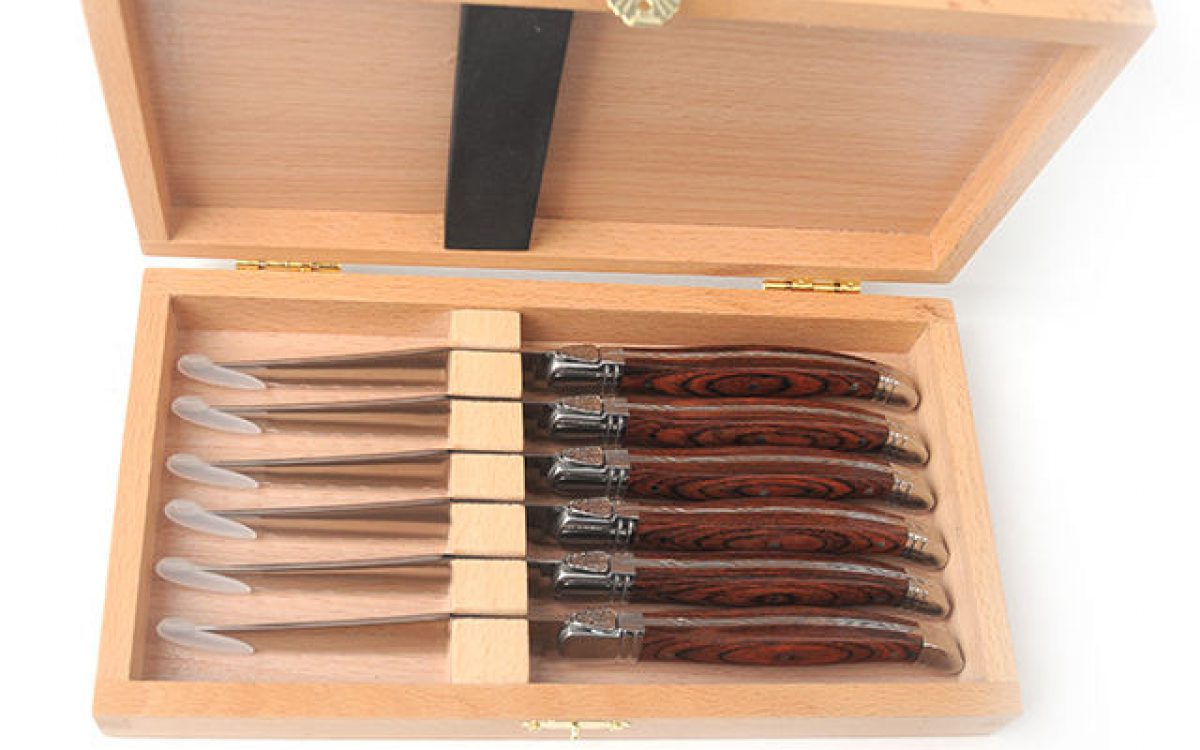
Knife packaging is where a housewares programme loses money quietly. It is usually the last item specified, the first item cut when the price gets tight, and the component most likely to fail regulation or arrive damaged.
This guide compares the formats that matter, with cost and compliance considerations attached.
Start from the channel, not from the box
| Channel | Purpose of the pack | Formats that fit |
|---|---|---|
| Physical retail, hanging | Product visibility, theft resistance, pegboard fit | Blister on printed card, skin pack, hanging fibre card with a window |
| Physical retail, shelf | Presence and brand storytelling | Printed carton with window or full print, knife block for sets |
| E-commerce, ship-in-own-pack | Survive delivery and look good on unboxing | Rigid box with an insert, or a sleeve over a protective inner |
| Promotional and gift | Perceived value, presentation | Magnetic rigid box, EVA or moulded pulp insert, fabric or satin lining |
| Bulk and foodservice | Protection at the lowest cost | Poly sleeve or kraft sleeve, inner carton, master carton |
Format comparison
| Format | Protection | Visibility | Relative cost | Recyclability |
|---|---|---|---|---|
| Poly bag only | Low | None | Lowest | Poor — soft plastic, often not collected |
| Kraft sleeve with print | Low to moderate | None, but printable | Low | Good if fibre-only and uncoated |
| Printed carton (folding boxboard) | Moderate | Moderate, with a printed render | Moderate | Good if no window or if window is fibre |
| Blister on printed card | Moderate | Highest — the product is visible | Moderate | Poor — mixed materials, hard to separate |
| Rigid or magnetic gift box | High | High on unboxing | Highest | Mixed — often laminated, sometimes with magnets |
| Moulded pulp insert in a fibre box | High | Moderate | Moderate to high | Excellent — the strongest recyclability story |
The knife-specific problems nobody mentions
- The edge must not touch the pack. A blade resting directly on card or in a loose bag gets its edge rolled in transit and arrives dull. Every serious pack has the blade held away from surfaces or in a blade guard.
- A tip can punch through. The point concentrates force. Retainers should hold the blade at the heel or spine, not rely on a snug fit around the tip.
- Weight and drop. A kitchen knife is dense and heavy for its size. A 200 g knife landing point-first will defeat a box that looks perfectly adequate. If the channel requires transit testing, buy it as a requirement — a pack that survives a courier network is a different design from one that survives a pallet.
- Sets need an insert, not a bigger box. Six loose knives in one box arrive rattling and scratched. Moulded pulp, EVA or a die-cut board insert is what makes a set arrive intact.
Compliance: packaging rules are now strict
In the EU, packaging regulation has moved toward requiring recyclability by design, limits on empty space and restrictions on certain formats. Three practical consequences for a knife SKU:
- Avoid mixed-material constructions unless you can demonstrate the pack is separable and actually recycled in practice.
- Size the pack to the product. Excess void is not just wasteful; in some formats it is non-compliant.
- Keep fibre certified. FSC or equivalent chain-of-custody documentation for paper packaging is a routine request from European retailers.
See our sustainability guide for the broader picture on claims and documentation.
The export pack, which is a different product
Retail packaging and export packaging are separate layers, and confusing them is a common source of damaged shipments.
| Layer | Function | Typical spec |
|---|---|---|
| Retail pack | Sell the product | As above |
| Inner carton | Group units, protect retail packs | Corrugated, printed or plain, sized to the retail pack |
| Master carton | Survive stacking and handling | Double-wall corrugated, adequate bursting strength, correct internal fitment |
| Palletisation | Survive container loading | Correct pallet type for the destination, stretch wrap, edge protection, moisture control where the route demands it |
Carton dimension and weight data are what your forwarder needs. Get the confirmed master carton dimensions, net weight and gross weight before you quote freight, and note that a change of handle material can shift the gross weight enough to affect a container loading plan.
Cost control without losing the pack
- Print one carton design for several SKUs and identify the model with a sticker or a printed label band. Cuts print plate cost across the range.
- Use standard carton sizes where possible. Custom sizes mean a custom die.
- Reserve the rigid box for the flagship. A gift box on the entry SKU destroys the price ladder.
- Get the sample as an assembled pack, not a flat printout, and drop it once.
FAQ
What is the cheapest packaging that still protects the blade?
A kraft sleeve with an internal blade guard, in a properly sized master carton. It is not retail-ready, but for foodservice and bulk channels it is the best cost-to-protection ratio.
Are plastic windows banned?
Not universally, but they increasingly count against recyclability criteria and can push a pack into a less favourable fee band or out of compliance with design rules in some markets. Fibre-only constructions are the safer choice for a new programme.
How do I choose a master carton size?
Fit the retail pack snugly, keep the carton within a standard pallet footprint for good utilisation, and keep the gross weight within manual handling limits. Your factory or forwarder should be able to model the pallet build for you.
Looking for a kitchen knife manufacturer?
We manufacture chef knives, knife sets, Damascus and steak knives in Yangjiang with OEM and private label service. Get a quote today.
Get Free Quote → Browse Products