Knife Heat Treatment Explained: Austenitising, Quenching, Tempering and Cryogenic Treatment
Two knives made from the same coil by the same factory can differ more in use than two knives made from different grades. Heat treatment is usually the reason. It is also the part of knife manufacturing least visible to a buyer, because it happens inside a furnace and leaves no trace on the finished product except its performance.
This article walks through the sequence and what each stage does to the steel.
The sequence
| Stage | Purpose | What goes wrong |
|---|---|---|
| 1. Annealing (usually at the mill) | Softens the steel so it can be stamped, cut or machined | Delivered too hard, cracking during forming |
| 2. Forming | Blade shape produced by stamping, cutting or forging | — |
| 3. Austenitising (hardening) | Heating to a temperature where the structure transforms, dissolving carbon into solution | Too low: incomplete solution, low hardness. Too high: grain growth, brittleness |
| 4. Quenching | Rapid cooling to trap a hard structure | Too slow: insufficient hardness. Too fast or uneven: cracking, distortion |
| 5. Cryogenic treatment (optional) | Cooling below zero to complete the transformation and refine the structure | Skipping it leaves retained austenite, which can reduce stability |
| 6. Tempering | Reheating to a lower temperature to trade some hardness for toughness | Too low: brittle. Too high: soft. Not done twice where needed |
| 7. Stress relief / straightening | Corrects distortion from quenching | Straightening cold can crack a hard blade |
Austenitising: the temperature window
Each steel grade has a hardening temperature range, typically published by the mill. For cutlery stainless grades these ranges are often 20 to 40 °C wide, and operating at the right point within the window matters:
- Below the range. Carbon and alloying elements do not fully dissolve, so the quenched hardness is lower than the grade is capable of, and the steel does not reach its potential wear resistance.
- In the range. Full solution with controlled grain size.
- Above the range. Grain growth. The blade may read the right hardness and still be more brittle and more prone to chipping, because toughness depends on grain size as well as on hardness.
This is the mechanism behind a knife that tests at the specified HRC and still chips in use. Hardness and toughness are not the same measurement, and only a microstructural check — which almost no cutlery buyer commissions — reveals the difference. See reading an HRC report.
Quenching: the medium matters
| Medium | Cooling rate | Typical use | Risk |
|---|---|---|---|
| Water or brine | Very fast | Simple carbon steels of low hardenability | High cracking and distortion risk |
| Polymer solution | Fast, controllable | Medium-hardenability steels | Concentration control is critical |
| Oil | Moderate | Alloy steels, including most cutlery stainless | Fire risk, fume, disposal |
| Molten salt (salt bath) | Fast and uniform | Production cutlery lines | Hygiene and safety management |
| High-pressure gas (vacuum furnace) | Slow to moderate | Higher-alloy grades, clean output | May be too slow for some low-alloy grades |
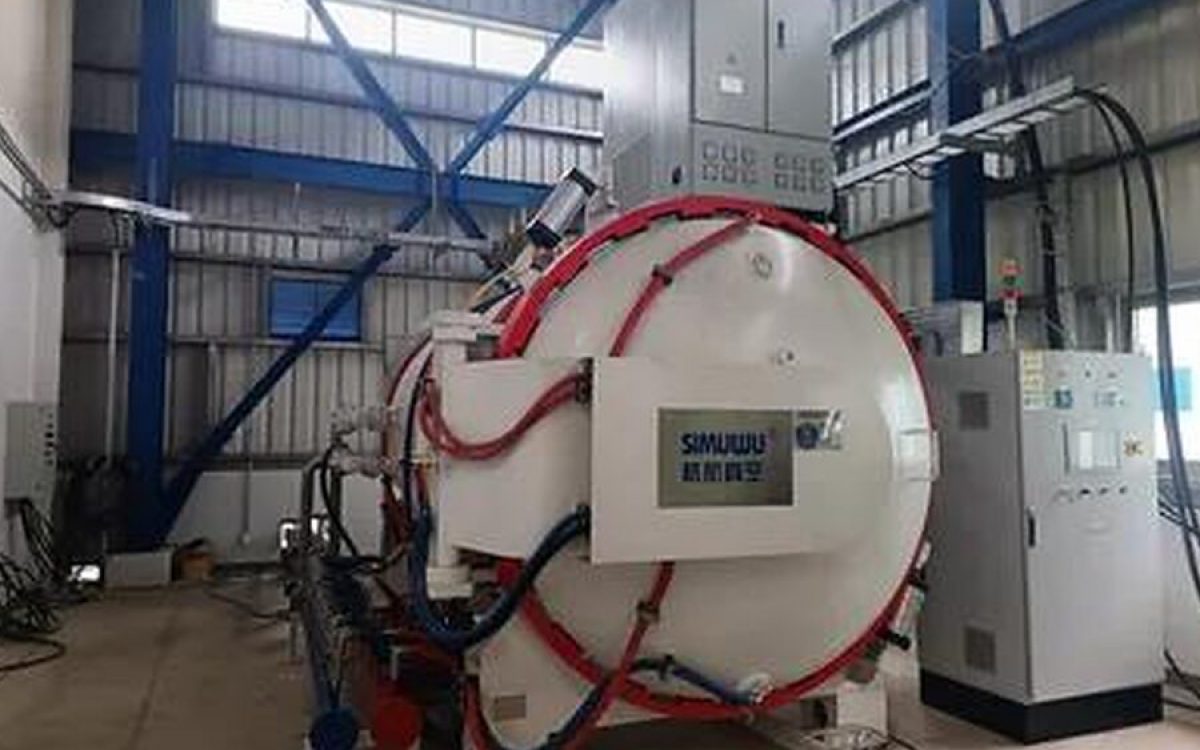
Salt bath and vacuum furnaces are the two routes most common in cutlery production. Salt bath gives fast, uniform cooling and suits high-volume lines; vacuum gives clean, oxide-free parts and good repeatability but a slower quench. Which one a factory runs tells you a lot about its volume and its product mix — see heat treatment furnaces.
Cryogenic treatment: what it does and does not do
Cooling the steel to well below zero after quenching completes the transformation of retained austenite into martensite, and promotes fine carbide precipitation during subsequent tempering. Reported effects include more stable dimensions, slightly higher achievable hardness, and more consistent edge behaviour over repeated sharpening.
| Claim | Assessment |
|---|---|
| Increases hardness significantly | Typically a small increase, sometimes 0.5–1.5 HRC, depending on the grade |
| Improves wear resistance | Generally positive, modestly; the effect is grade-dependent |
| Improves corrosion resistance | Often cited; the mechanism relates to a more homogeneous structure |
| Transforms a poor heat treatment into a good one | No. It is a finishing step, not a substitute for correct austenitising and quenching |
| Is essential for every kitchen knife | No. It is worth doing on harder, higher-alloy grades where retained austenite is a real concern |
Cryogenic treatment is frequently presented as a headline feature. Its practical value is real but modest, and where a factory advertises cryo treatment while being vague about its austenitising control, the priority is the wrong way round.
Tempering: where toughness is set
Tempering reheats the quenched steel to a lower temperature, relieving internal stress and reducing brittleness at the cost of some hardness. As a rule, a higher tempering temperature gives lower hardness and higher toughness. Two practical points:
- Double tempering is common on higher-alloy steels, because a single temper may leave transformation products that need a second cycle to stabilise.
- Some grades show a secondary hardening peak, where hardness rises again at higher tempering temperatures. This is a feature of certain alloy systems and is a genuine reason why the temper temperature for a grade is not a free choice.
The consequence for a buyer: the hardness on a certificate tells you where the whole sequence landed, not how well it was run. A 58 HRC blade can be 58 HRC with fine grain and low retained austenite, or 58 HRC with coarse grain and high retained austenite. Both read the same on a hardness tester.
What a buyer can reasonably ask for
| Request | Reasonable? | What it tells you |
|---|---|---|
| The hardening temperature and soak time for the grade | Yes | Whether the factory knows the published range for the steel |
| The quench medium | Yes | Whether it matches the grade's hardenability |
| Temper temperature and number of cycles | Yes | Whether the process is specified or habitual |
| Furnace charts or records for a recent batch | Yes | Real evidence of process control |
| Hardness results across a lot, with the spread | Yes | Consistency, which matters more than the average |
| Retained austenite measurement | Unlikely, and usually unnecessary | — |
Where a factory can produce records showing the curve, the setpoint and the actual readings, that is a strong signal. Where the answer is "we know the right temperature", the process is being run on habit, and habit does not survive a change of operator or furnace.
FAQ
Does a higher HRC always mean a better knife?
No. Higher hardness raises wear resistance and lowers toughness. For a kitchen knife used on a board it is usually beneficial up to a point; for a knife likely to contact bone or be used carelessly, harder is often worse.
Can I tell whether heat treatment was done well from the finished knife?
Only indirectly: hardness consistency across a lot, edge behaviour in a cutting test, and whether a factory can show process records. There is no field test for grain size or retained austenite.
Is salt bath treatment outdated?
No. It is fast, uniform and widely used in production cutlery. Vacuum furnaces offer cleanliness and repeatability for certain grades and products. Both are legitimate.
Does heat treatment affect corrosion resistance?
Yes, indirectly. Chromium in solution protects the steel; if hardening and tempering leave chromium tied up in carbides, corrosion resistance falls. This is one reason a hard grade with high carbide volume can stain more than its chromium content suggests. See rust and corrosion.
Looking for a kitchen knife manufacturer?
We manufacture chef knives, knife sets, Damascus and steak knives in Yangjiang with OEM and private label service. Get a quote today.
Get Free Quote → Browse Products