Custom Knife Sheaths, Guards and Storage Accessories
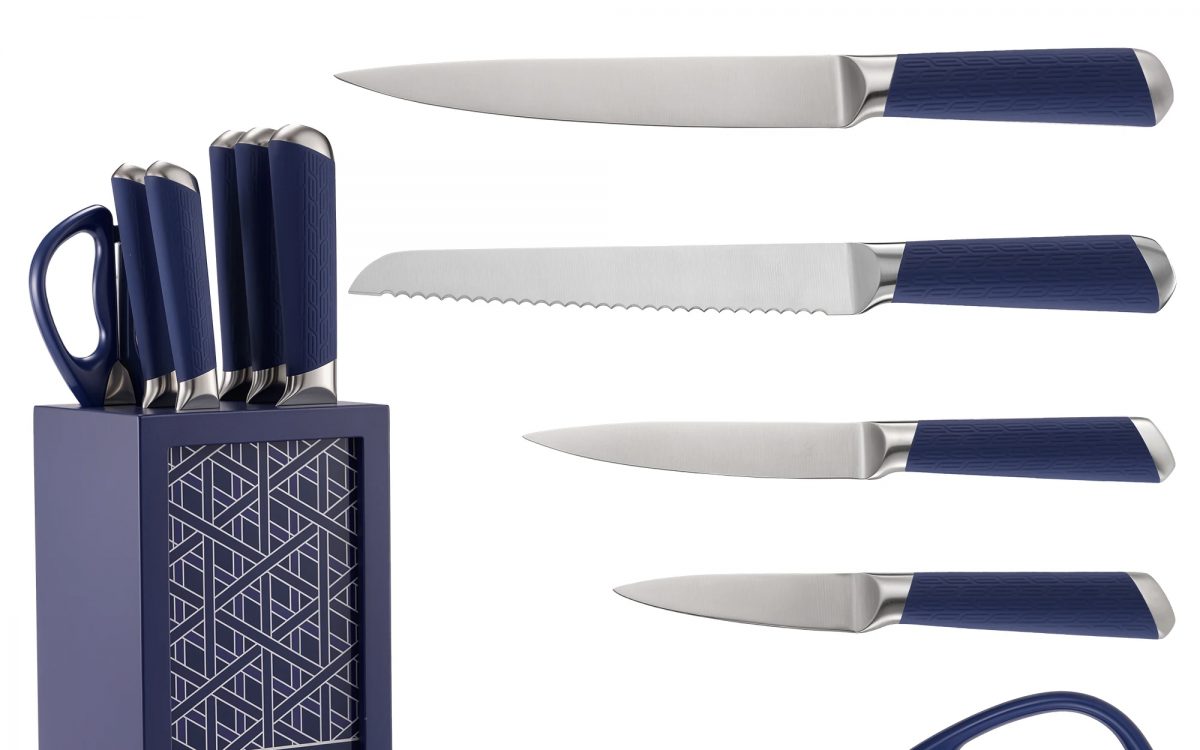
Sheaths, guards, rolls, blocks and magnetic strips are accessories, and accessories are where a knife brand quietly makes margin. They also carry a disproportionate share of liability exposure, because a sheath that lets the edge through causes a cut, and a block that will not hold a knife causes a domestic accident.
This article covers the accessory line, the materials, the safety requirements and the commercial logic.
The accessory line
| Accessory | Function | Cost tier | Margin potential | Safety exposure |
|---|---|---|---|---|
| Blade guard / edge guard | Protects the edge in a drawer | Very low | High as an add-on | Low, unless it falls off |
| Fitted sheath, fabric or leather | Transport and storage | Low to moderate | High | Moderate — retention and edge penetration |
| Kydex or moulded rigid sheath | Retention, transport | Moderate | High | Low, if retention is specified |
| Knife roll, canvas or leather | Chef transport, set storage | Moderate to high | High | Moderate — tip puncture through fabric |
| Magnetic knife strip or bar | Wall storage | Low to moderate | Moderate | Moderate — magnet strength and mounting |
| Wooden knife block | Countertop storage | Moderate to high | Moderate to high | Low, if slots fit |
| In-drawer knife tray | Drawer storage | Low to moderate | Moderate | Low |
| Honer or sharpening rod | Edge maintenance | Low to moderate | High | Low |
| Pull-through sharpener | Consumer sharpening | Low | High | Moderate — poor sharpeners damage edges and disappoint |
| Whetstone or stone set | Serious sharpening | Moderate | High | Low |
| Cutting board | Surface | Moderate | Moderate | Low |
Materials for sheaths and rolls
| Material | Finish quality | Durability | Washability | Cost | Notes |
|---|---|---|---|---|---|
| Polypropylene or PE sleeve | Basic | Moderate | Good | Lowest | Often a disposable edge guard |
| Cordura or heavy nylon | Functional | High | Good | Low | Good for professional channels |
| Canvas, cotton or waxed | Warm, traditional | Moderate to high | Moderate | Low to moderate | Popular in chef rolls |
| Genuine leather | Premium | Very high | Poor | Moderate to high | Animal origin may affect some market claims |
| PU or synthetic leather | Premium appearance | Moderate — can delaminate | Good | Low to moderate | Careful specification; cheap PU cracks |
| Kydex / thermoformed sheet | Technical | Very high | Excellent | Moderate | Requires a forming tool per blade shape |
| Felt, wool or synthetic | Soft, protective | Moderate | Poor | Low | Excellent edge protection inside a tray |
| Moulded pulp | Sustainable | Moderate | Poor | Low | Needs a mould; moisture sensitive |
| FSC-certified wood | Premium | High | Poor | Moderate | Chain of custody documentation required for the FSC claim |
Safety requirements — the part that is not optional
Edge containment
A guard or sheath must contain the entire edge, including the tip, and must not be penetrable in normal use. The test is simple and should be in the specification: apply a defined pull force to the sheath while the knife is seated and confirm the edge does not expose. A common industry reference is a pull test of roughly 10 to 20 N, but the number matters less than having one and testing to it.
Retention versus removability
There is a tension. A sheath tight enough not to fall off is a sheath a user may force, and forcing causes accidents. The design answer is a positive retention feature — a snap, a strap, a friction detent with a defined release force — rather than raw friction alone.
Tip puncture
Fabric rolls fail at the tip. The tip of a 20 cm chef knife under load will push through a single layer of lightweight fabric. Solutions are a reinforced tip pocket, a separate tip guard, or a heavier interlayer. Test the assembled roll by inserting the longest knife and pressing the tip area against a hard surface.
Magnetic storage
A magnetic strip must hold the knife securely against a knock and must not magnetise the knife to a degree that attracts steel swarf into a food environment. Specify the magnet type and the holding force, and require a test: mount the strip, attach the heaviest knife in the range, apply a defined lateral force, confirm the knife does not fall. Also require that the mounting hardware is included and rated for the weight — most failures of magnetic strips are mounting failures, not magnet failures.
Blocks and trays
Slots must be sized to the actual knives. A loose slot lets a blade contact the next blade and chip it; a tight slot means the user forces the knife and cuts themselves. Specify slot dimensions against the blade height and spine thickness with a stated clearance, and test with the actual product. See set design.
Commercial logic
| Accessory strategy | Effect | Cost to implement | Best timing |
|---|---|---|---|
| Include an edge guard in every knife box | Reduces transit edge damage, positive unboxing | Very low per unit | From the first order |
| Offer a matching roll as a separate SKU | High-margin add-on, brand presence | Moderate — new supplier and specification | Phase 2 |
| Block set as a premium configuration | Strong gift proposition | High — new supplier, tooling, freight | Phase 3 |
| Pull-through sharpener as a bundle | Increases basket value | Low, but quality risk to the brand | Only with a genuinely good sharpener |
| Whetstone as a premium add-on | Builds credibility with enthusiasts | Moderate | Phase 2 to 3 |
| Magnetic strip as a gift-channel add-on | Differentiates the gift offer | Moderate | Gift programmes |
The pull-through sharpener deserves a warning. A cheap pull-through with carbide blades removes a large amount of steel, creates a rough edge and shortens the knife's life. Pairing a good knife with a mediocre sharpener produces a customer who blames the knife. If you cannot source a sharpener that treats an edge well, sell a stone or a rod instead.
Deliberate omission from the accessory line
Two accessory types are best left out:
- Hard plastic covers that look like toys. A brightly coloured plastic sleeve may attract children to a drawer knife. Consider the market and the audience.
- Anything requiring its own certification that the brand cannot maintain. Electrical sharpeners and any product with a powered component bring a separate compliance regime and a separate liability profile. Do not add one casually.
Specifying an accessory
- Material with a grade, and a specification for any coating, dye or finish.
- Dimensions tied to the actual knife, with clearances.
- Retention test: method, force and pass criterion.
- Tip containment test for fabric products.
- For food contact accessories: a compliance statement for the material. See packaging compliance.
- Care and wash instructions, printed on the product or the pack.
- Golden sample retained by both parties.
One further point: an accessory shipped inside a gift box is part of the retail pack and must meet the packaging food contact and labelling rules of the destination, even though it is not itself a food contact item. See heavy metal migration for the materials side.
Checklist
- Start with an edge guard in the box, because it costs almost nothing and prevents damage.
- Add accessories in phases, matching the range extensions.
- Specify and test retention rather than assuming it.
- Never bundle a sharpener you have not tested on your own knife.
- Confirm material compliance for anything that could touch food.
- Keep the accessory specification as complete as the knife specification.
Related reading
Looking for a kitchen knife manufacturer?
We manufacture chef knives, knife sets, Damascus and steak knives in Yangjiang with OEM and private label service. Get a quote today.
Get Free Quote → Browse Products