Designing Kitchen Knife Sets: Combination Logic, Presentation and Cost
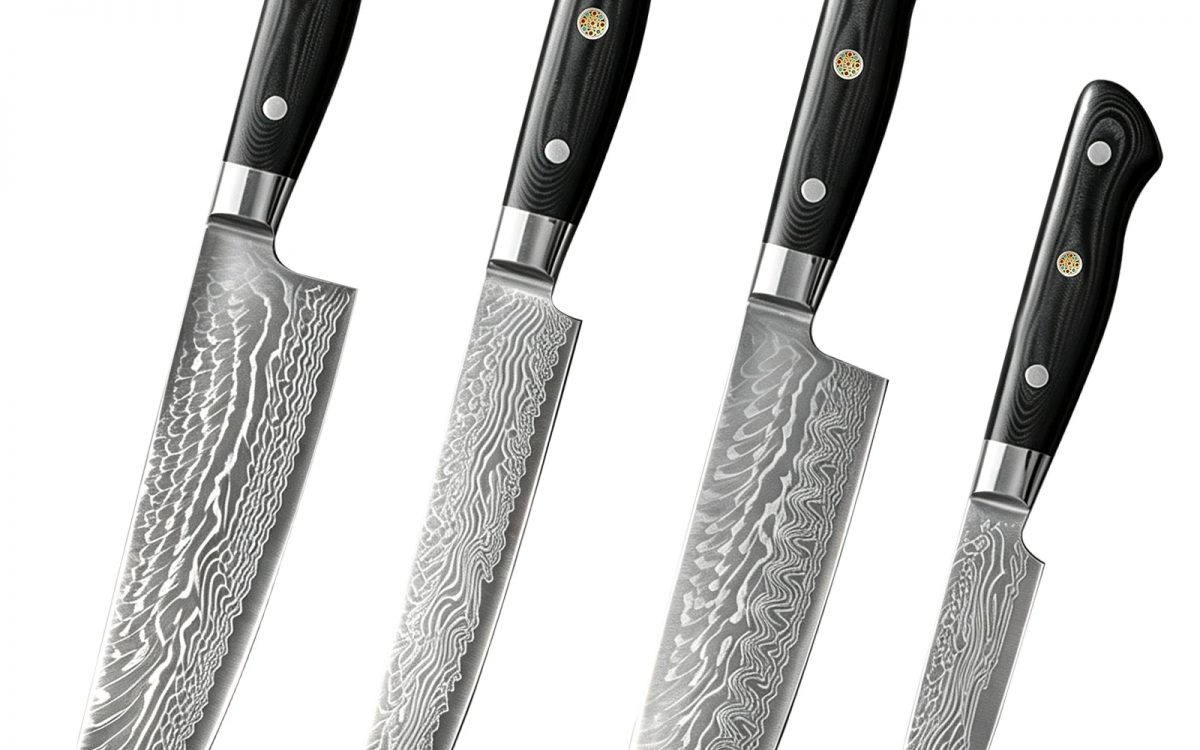
A set is not several knives in a box. A set is a purchased decision, a price point and a packaging project, and the knives inside it are chosen to satisfy a rationale the buyer can explain to themselves in the shop.
This article covers the combination logic that makes a set sell, the cost arithmetic, and the presentation choices.
Why sets exist commercially
| For the buyer | For the brand | For the retailer |
|---|---|---|
| A complete kitchen in one decision | Higher average order value | Higher transaction value |
| Cheaper per knife than buying separately | Better use of shelf space | Better use of shelf space |
| A solution to "what do I need" | Clears slower-moving SKUs | Gift and seasonal opportunity |
| A presentable gift | Channel leverage with the box | An anchor for promotions |
| Consistent appearance on the block | Stronger brand presence in the kitchen | Stronger brand presence on the shelf |
The commercial point: a set converts a €49 sale into a €119 sale without any new product development, provided the knives in it already exist as SKUs.
The classic combinations
| Set | Contents | Typical retail band | Buyer | Rationale |
|---|---|---|---|---|
| Two-piece starter | Chef 20 cm + paring 9 cm | Entry to mid | First proper knives | The two knives that do most work |
| Three-piece essential | Chef 20 cm + paring 9 cm + utility 13 cm | Mid | Home cook | Adds the middle knife for smaller tasks |
| Three-piece chef's | Chef 20 cm + santoku 18 cm + bread 21 cm | Mid to premium | Enthusiast home cook | Three distinct techniques, no duplication |
| Five-piece kitchen | Chef, santoku, paring, utility, bread | Premium | Gift and upgrade | Covers the whole block |
| Six-piece with block | Five knives plus a block or sharpener | Premium to gift | Gift, wedding registry | Presentation-driven |
| Two-piece Japanese style | Santoku 18 cm + petty 12 cm | Mid to premium | Japanese aesthetic buyer | Distinctive, sells on look |
| Steak set of four or six | Steak knives only | Mid to premium | Dining, gift | Table presentation, matched pairs |
| Cheese and charcuterie set | Cheese knife, fork, small utility | Mid to premium | Gift, entertaining | Occasion-driven |
Combination principles
1. No overlap in function
A set containing a 20 cm chef knife and an 18 cm santoku has two knives doing the same job. A buyer may not articulate it, but the set feels padded. Either pick one, or move to a sufficiently different second shape.
2. Perceived value has to be visible
Five knives of the same size in different shapes reads as five of the same. Sets that photograph well have visible variety: different lengths, different widths, different silhouettes.
3. One of everything the buyer actually uses
| Function | Knife | Importance in a set |
|---|---|---|
| Main chopping, slicing, dicing | Chef or santoku | Essential |
| Small work in hand | Paring | Essential |
| Bread and crusty foods | Serrated bread knife | High — often the missing piece |
| Fruit, small vegetables | Utility or petty | Medium |
| Meat carving | Carving or slicer | Medium |
| Fish filleting | Fillet knife | Low, but high satisfaction where present |
| Boning | Boning knife | Low for home, high for serious cooks |
4. The price ladder has to make sense
A set must be cheaper than the sum of its parts, and the discount has to be legible. If single knives are €49 and the three-piece set is €149, the buyer sees a €2 saving and stops caring. If the set is €119, the saving is €28 and the set becomes the obvious purchase.
| Item | Retail | Set price | Saving | Set as share of unit sum |
|---|---|---|---|---|
| Chef 20 cm | €49 | €119 | €28 | 81% |
| Paring 9 cm | €29 | |||
| Utility 13 cm | €35 |
A set priced at 78–85% of the unit sum is a conventional and legible saving. Below 75% the set starts to cannibalise single-knife sales without adding margin.
5. Sets should not contain hero knives
Putting the €99 hero in a set drags the set price up and discounts the hero. Keep hero SKUs single-purchase and build sets from the core and entry tiers.
Cost arithmetic for a set
| Cost element | Single knife | Set | Note |
|---|---|---|---|
| Unit FOB per knife | X | 3X | No saving unless ordered in set quantities |
| Retail pack per knife | Y | 0 | Eliminated — the set box is the pack |
| Set box | 0 | Z | Z is usually greater than Y but less than 3Y |
| Set insert (moulded pulp, EVA) | 0 | W | Often overlooked; can be significant |
| Extra assembly labour | 0 | Small | Placing and inspecting three items |
| Freight per set | — | Higher volume, lower density | A set box is mostly air; volumetric weight matters |
The freight point is commonly missed. A three-knife set box occupies far more volume than three retail-packed knives, so a sea-freight quote based on weight will be optimistic. Quote sets on volumetric weight and check the carton count per container. See shipping.
Presentation formats
| Format | Perceived value | Cost | Protection | Best channel |
|---|---|---|---|---|
| Printed carton with moulded pulp insert | Good | Moderate | Good | Retail, e-commerce |
| Rigid box with EVA or foam tray | High | High | Very good | Gift, department store |
| Wooden presentation box | Very high | High | Very good | Premium gift |
| Wooden block with slots, no outer carton | High | High | Good for retail, poor for shipping | Retail display |
| Roll bag, canvas or leather | Moderate to high | Moderate | Moderate | Chef channel, travel, gift |
| Magnetic flap closure carton | High | Moderate | Good | Retail and gift; strong unboxing |
| Shrink-wrapped on a card | Low | Very low | Low | Value B2B |
The rigid box with a moulded insert is the highest perceived value per unit of cost in most cases, particularly for gift season. It also has the longest lead time because the insert is usually custom-cut or custom-moulded.
Block sets — a special case
A wooden block set is the strongest gift proposition and the most logistically awkward product in cutlery. Considerations:
- Wood species and treatment. A block is a large wooden article in a food environment; it needs to be properly dried and treated or it will crack in the destination climate.
- Weight. A filled block can exceed 4 kg, which pushes freight and handling.
- Slot layout. Slots must be sized to the actual knives. A block with generic slots produces knives that wobble or that will not seat.
- Orientation. Angled slots display better and take more height.
- Quarantine. Wood packaging and wooden articles may attract plant health requirements in some markets. Check before committing. See Japan as an example of a market where wooden articles get scrutiny.
Set packaging compliance
A set multiplies compliance work, not divides it. Each knife needs to meet the food contact requirements of the destination, and the set adds a packaging layer with its own requirements. The declaration you provide for the set must cover every component. See packaging compliance and PPWR.
Practical rule: for a set, produce a component-level compliance matrix listing each knife, each material, and each document. A single "compliant" statement covering the whole set is not auditable.
Designing the set for retail photography
- Arrange by descending length, left to right, with handles aligned.
- Show a full handle and a full blade for at least the main knife.
- Open the box on one side so the product is visible before purchase in gift channels.
- Place small text on the back, not the front. The front is for the shape and the price.
- Include an interior label with the knife list so a gift recipient identifies each piece.
Checklist
- Choose the audience, then the price point, then the contents, in that order.
- Check for functional overlap and remove it.
- Price the set at 78–85% of the unit sum.
- Keep hero SKUs out of sets.
- Quote freight on volumetric weight.
- Confirm the insert is designed against the actual knives.
- Build the component-level compliance matrix.
Related reading
Looking for a kitchen knife manufacturer?
We manufacture chef knives, knife sets, Damascus and steak knives in Yangjiang with OEM and private label service. Get a quote today.
Get Free Quote → Browse Products