EU Packaging and Packaging Waste Regulation (PPWR): What It Means for Kitchen Knife Retail Packaging
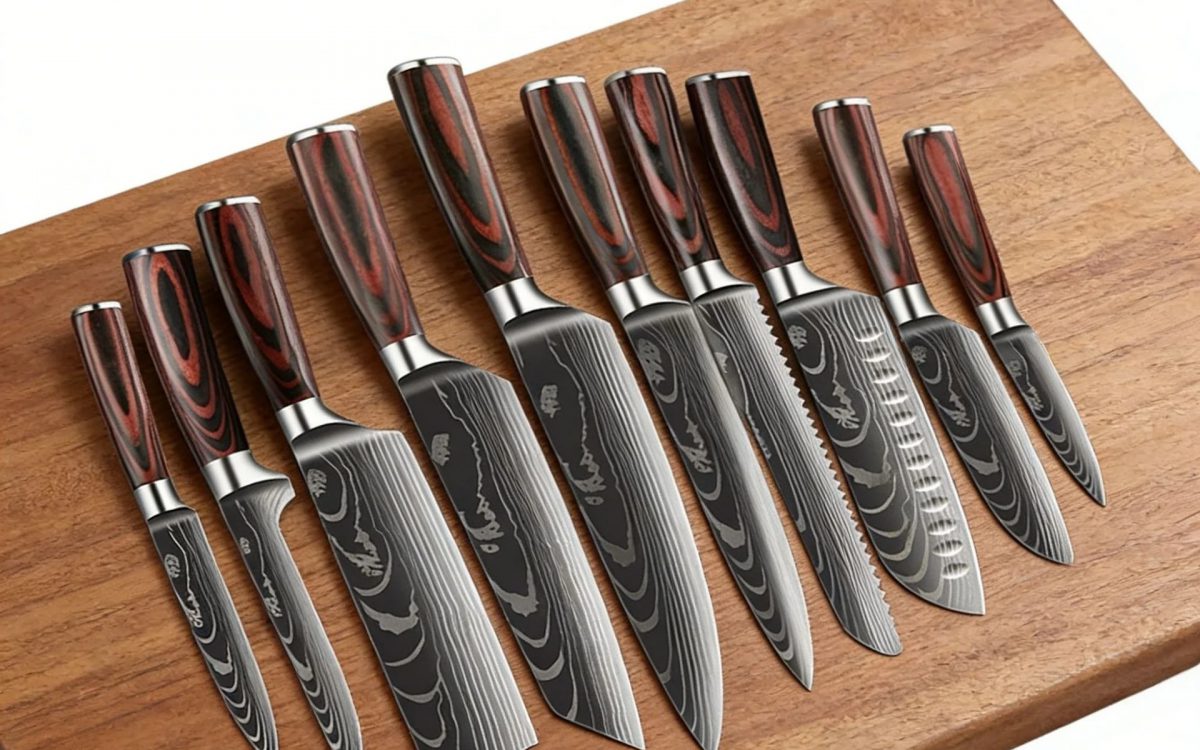
Retail packaging for cutlery has been designed around shelf impact for decades. Regulation (EU) 2025/40, the Packaging and Packaging Waste Regulation — usually shortened to PPWR — adds a second set of constraints that apply whether or not the shelf still exists. For knife programmes sold in the EU, packaging stops being a design preference and becomes a compliance document.
This article covers what PPWR changes in practical terms for boxed and carded knife sets, what the timeline actually is, and where the costs land.
What PPWR is, and how it differs from the old directive
The previous framework, the Packaging and Packaging Waste Directive, was transposed into national law separately by each member state. That produced 27 slightly different regimes. PPWR is a regulation: it applies directly and uniformly. For an exporter selling into several EU markets, the practical effect is that one set of rules replaces the national variations — but the rules are stricter than most of what they replaced.
| Topic | Old directive | PPWR |
|---|---|---|
| Legal form | Directive — national transposition | Regulation — directly applicable |
| Recyclability | Recycling targets at member state level | Design requirements on the packaging itself |
| Empty space | Not addressed | Explicit limits on empty space in grouped, transport and e-commerce packaging |
| Substances of concern | Limited | Restrictions on substances that hinder recycling |
| Labelling | National schemes | Harmonised sorting and material labelling |
What this means for a knife box
A typical retail knife set ships in a printed folding carton, often with a moulded insert, sometimes inside a window sleeve. Each element is assessed separately.
Recyclability of the carton
Folding board is recyclable in principle. What threatens it is what is added: laminated plastic windows, metallic foil blocking that cannot be separated, heavy varnish over the whole panel, magnetic closures bonded to the board. The design question shifts from "does this look expensive" to "can a mill process this without rejecting the batch".
Empty space
PPWR introduces limits on empty space ratio for grouped, transport and e-commerce packaging. A knife in a large presentation box with a moulded bed has a high empty space ratio by definition. Gift packaging sits awkwardly against this rule. If your programme depends on oversized presentation boxes, this is the clause to read carefully with your packaging supplier rather than second-hand.
Substances that hinder recycling
Certain inks, adhesives and coatings are being restricted because they contaminate recycling streams. The practical exposure for cutlery packaging is the adhesive used for the window film and the laminate structure of any plastic insert.
The timeline, read carefully
PPWR entered into force in 2025 and applies from 2026, with a series of later milestones for specific requirements. Recyclability design requirements, recycled content thresholds and reuse targets phase in over subsequent years rather than arriving all at once.
Do not plan against a single date. The regulation contains multiple transition points by packaging category and material. Ask your packaging supplier which obligation applies to your specific pack format and from which date, and get the answer referencing the article of the regulation rather than a general summary.
Cost implications for a knife programme
| Change | Direction of cost | Note |
|---|---|---|
| Removing plastic windows | Lower material cost | But loses shelf visibility — needs a printed visual instead |
| Monoboard construction | Lower cost, simpler | Requires redesign and a new die |
| Water-based inks and adhesives | Neutral to slightly higher | Print appearance can shift; needs approval |
| Reducing gift box volume | Lower board and freight cost | Reduces perceived value — a marketing decision, not just a compliance one |
| Recycled content in board | Often neutral | Availability and print quality are the constraints |
| New sorting labels | Minor | Requires an artwork revision round |
The overall direction for standard retail packaging is cost-neutral or cheaper, because simpler packaging is lighter and cheaper. The exposure sits in premium gift formats, where the current design language of heavy board, foil, magnets and moulded inserts is hardest to reconcile with design-for-recycling rules.
What to ask your packaging supplier
- Which PPWR obligation applies to this pack format, and from which date?
- Is the board/ink/adhesive combination recyclable in the main EU sorting streams, and can you show the evidence?
- What is the empty space ratio of this pack, and how does it compare with the applicable limit?
- If elements are not recyclable, which ones, and what is the redesign option?
- Can the artwork carry the required sorting label, and where on the panel?
Get these answers in writing before tooling is cut. A packaging change after launch means new dies, new artwork and a stock write-off. Our packaging guide covers the structural choices alongside these rules, and the EU, US and Japan compliance overview puts PPWR in the context of the food contact rules that apply to the knife itself.
FAQ
Does PPWR apply to the knife or to the packaging?
The packaging. The knife is covered by food contact legislation — EU 1935/2004 and the implementing measures. The two regimes are separate and both apply to a packaged retail knife.
Is a plastic-free pack required?
No. PPWR works through recyclability and design requirements, not a material ban. A pack with plastic can comply if the plastic element is compatible with the sorting and recycling stream it will enter.
Does this affect knives sold outside the EU?
Not directly. But packaging is frequently common across markets for cost reasons, and UK, US and several Asian markets are moving in a similar direction. Designing to PPWR once is usually cheaper than designing twice.
Our packaging is supplied by the factory. Whose obligation is it?
Under EU law, obligations sit with the party placing the packaged goods on the market — normally the importer or the brand owner. A supplier certificate does not transfer that responsibility. This point is developed in our article on compliance liability in private label.
Looking for a kitchen knife manufacturer?
We manufacture chef knives, knife sets, Damascus and steak knives in Yangjiang with OEM and private label service. Get a quote today.
Get Free Quote → Browse Products