Custom Knife Packaging Development: From Structural Design to Retail-Ready Artwork
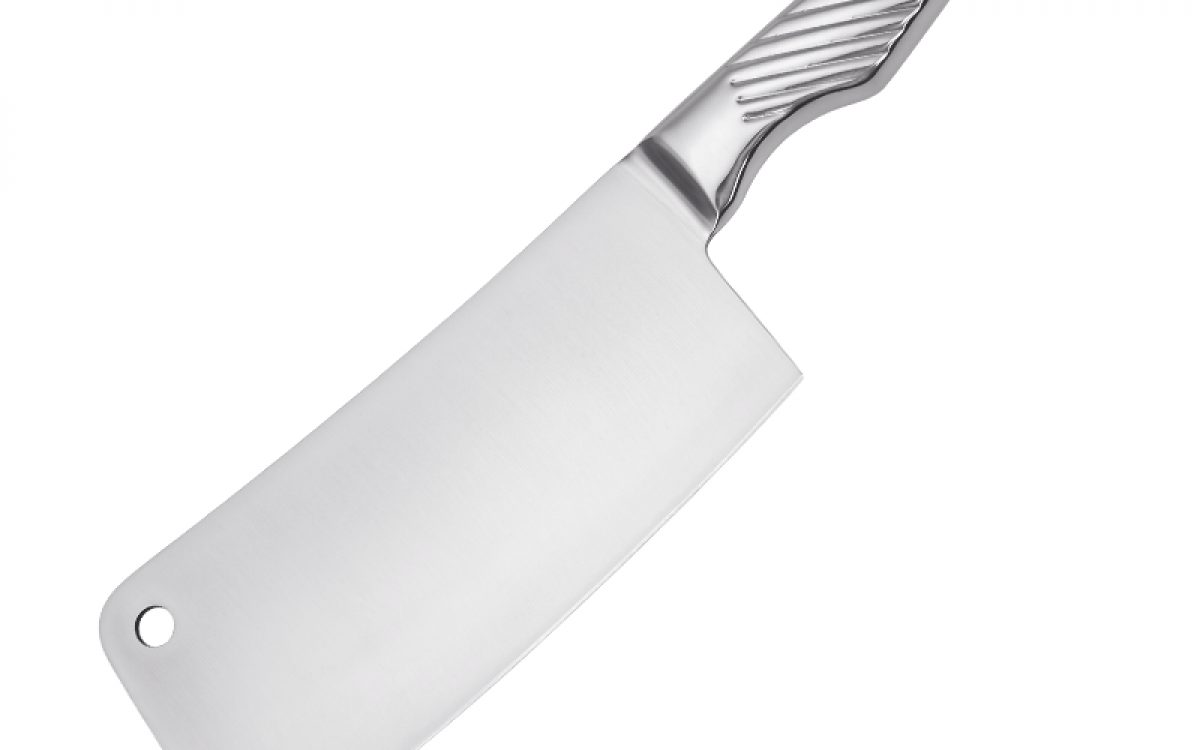
Kitchen knife packaging fails in one of three ways: it damages the product, it misrepresents the product, or it breaks a legal requirement. Sometimes all three at once, because packaging is usually the last thing in a project and the least time is left for it.
This is a structural and commercial guide to developing a private label knife pack that survives retail.
Choosing the pack format
| Format | Protection | Perceived quality | Unit cost | Shelf presence | Best for |
|---|---|---|---|---|---|
| Folding carton, printed | Low to moderate | Moderate | Low | Good graphics, small footprint | Volume retail, sets |
| Blister on printed card | Moderate | Low to moderate | Low | Product visible | Hardware channels, value lines |
| Skin pack on card | Moderate | Moderate | Low | Very visible, tidy | Mid-market retail |
| Moulded pulp insert in carton | High | High | Moderate | Good, eco signalling | Premium and eco lines |
| EVA or foam tray in rigid box | Very high | Very high | High | Strong gift presence | Gift channel, high-end sets |
| Wooden or rigid presentation case | High | Very high | High | Strong | Gift, direct sales, limited editions |
| Knife sleeve only, no carton | Low | Low | Very low | None | Knife rolls, B2B, catering supply |
Protection requirements
A kitchen knife is a long, thin, hard object with a sharp edge. Pack design has to address four failure modes:
- Edge contact. The edge must not touch any hard surface in the pack. A carton that lets the blade sit on a pulp rib will chip or roll edges in transit. The blade should be retained by the face and the spine, not the edge.
- Tip puncture. Tips are the most likely part to break through a carton wall, particularly in drop testing. Reinforce or offset the tip area.
- Handle movement. If the handle can slide, the blade can slide. Retention should grip the handle, which is the stiffest part.
- Moisture. A knife shipped by sea in a sealed pack can show surface staining. A corrosion inhibitor — a VCI paper wrap or a vapour-phase liner — is inexpensive insurance for humid routes.
Testing the pack before you print
| Test | Method | Pass criterion |
|---|---|---|
| Drop test | ISTA 1A or 2A sequence, or an agreed single-drop height and orientation | No blade exposure, no edge damage, no broken pack |
| Vibration | ISTA 3A or a defined shuttle profile | No abrasion marks on blade or handle, no pack collapse |
| Compression | Stack load equivalent to the pallet height | No crushing, blade still retained |
| Transit trial | One carton sent through the actual route | Cosmetic condition acceptable to retail |
| Retail handling | Open and reclose the pack several times | No tearing that exposes the edge |
A drop test on an unprinted white carton costs almost nothing and is the single highest-return test in a packaging project. Discovering the tip punctures after 20,000 printed cartons have been made is the expensive version.
Artwork — what must be on the pack
Requirements vary by market. The following are the common mandatory elements:
| Element | EU | US | UK | Japan | Gulf |
|---|---|---|---|---|---|
| Product name and type | Required | Required | Required | Required, in Japanese | Required |
| Brand name and responsible operator address | Required (importer or EU operator) | Required | Required (UK operator) | Required (importer) | Required (importer) |
| Country of origin | Required for imported goods | Required | Required | Required | Required |
| Food contact statement or symbol | Required at point of sale | Requires substantiation | Required | Required | Required |
| Material declaration | Material and grade for contact parts | Recommended | Material | Material | Recommended |
| Care instructions | Recommended | Recommended | Recommended | Recommended | Recommended |
| Warnings (sharp, dishwasher) | Recommended | Recommended, Prop 65 if applicable | Recommended | Recommended | Bilingual, Arabic and English, recommended |
| Recycling and disposal marking | Required per material, member state rules vary | State rules vary | Required | Required | Varies |
| Barcode | Required for retail | UPC/EAN required | Required | JAN | Required |
| CE or UKCA mark | Generally not applicable to a kitchen knife as such | n/a | Generally not applicable | n/a | n/a |
The CE question causes more confusion than any other. A plain kitchen knife is not covered by a CE marking directive in the sense most buyers mean; the mark appears on packaging mainly when an accessory, a machine component or a decorative technical claim brings the product into scope, or when the buyer simply expects it. See CE and UKCA misconceptions. Never print a mark because a buyer asked for it; print it because it applies.
Colour, print and finish
- Board weight. For a knife over 200 mm, 300 gsm board folds and bows. 350–400 gsm or a thin corrugate is more usual. Test with a real knife, not a dummy.
- Print process. Offset gives the best graphics and needs print plates; digital has no plates and suits small runs. For short private label runs digital is often cheaper end to end.
- Spot colour. Matching a brand colour across a board, a printed sleeve and a barcode label is harder than it looks. Specify a reference and approve a printed proof, not a screen image.
- Lamination and coating. Matt lamination reads as premium; soft-touch reads as premium and shows fingerprints. Gloss is functional but reads cheap in cutlery. Water-based coatings are the recyclability-friendly option.
- Foil and embossing. High perceived quality, one-off die cost, and they cannot be recycled with the board in many streams. Use them knowingly.
Retail channel specifics
| Channel | Pack implication |
|---|---|
| E-commerce / Amazon | Needs a transit-proof pack because the retail pack is the shipping pack, or a separate overbox. Tipping-point rules apply. See e-commerce requirements. |
| Supermarket and hypermarket | Standardised unit load, often defined carton counts and pallet patterns, strong front-facing graphics. |
| Specialist cookshop | Handling by staff, ability to present the knife, less rigid standardisation. |
| Department store | Greater expectation of a presentation pack and set packaging. |
| Gift and promotional | Box quality is the proposition. See gift channel. |
| B2B catering supply | Bulk packs, minimal branding, sleeve or roll, price per piece dominates. |
Carton counts and pallet patterns
Retail buyers request specific outer carton counts and the pack has to be designed backwards from that. A carton count of 24 requires the pack footprint to divide into an outer dimension that stacks efficiently. A pack designed without regard to the outer carton will produce a pallet with wasted volume and a freight cost per unit that is higher than it needs to be. See shipping for how volume drives cost.
Sustainability claims
Sustainability is now a purchasing criterion in European retail, and it is also a legal risk area. Rules on what a packaging claim may say are tightening under the EU packaging and green-claims framework, and claims such as "100% recyclable" or "eco-friendly" without a substantiated basis are enforceable against. See PPWR.
The defensible approach is to describe the material accurately, state the recycled content by an auditable figure, state which stream it is designed for, and avoid absolute language.
Packaging development checklist
- Choose format based on channel, protection and price band.
- Confirm blade retention touches the spine and face, never the edge.
- Run a drop test on an unprinted prototype carton.
- Define the artwork element list per target market.
- Verify every claim has a document behind it.
- Approve a printed proof, not a digital file.
- Confirm pack footprint against the outer carton and pallet pattern.
- File the approved artwork with a version number and date.
Related reading
Looking for a kitchen knife manufacturer?
We manufacture chef knives, knife sets, Damascus and steak knives in Yangjiang with OEM and private label service. Get a quote today.
Get Free Quote → Browse Products