Kitchen Knives on Amazon and E-Commerce: Category Requirements and Packaging Reality
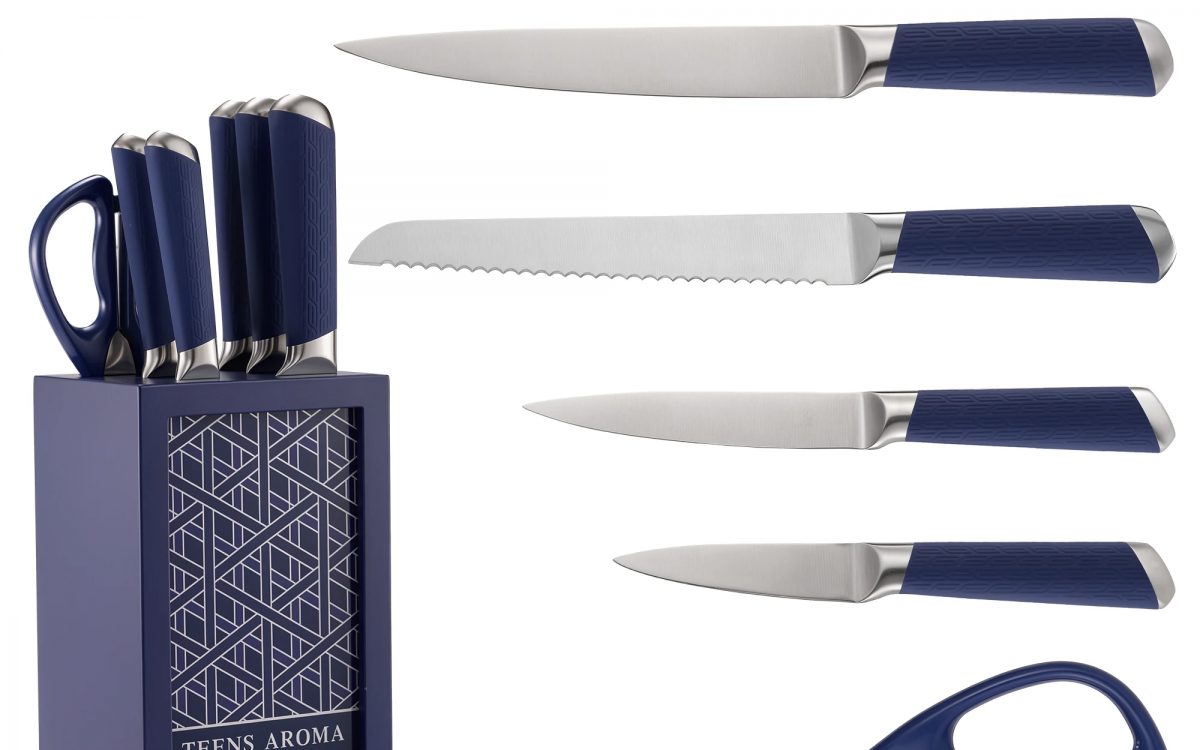
E-commerce changed what a kitchen knife has to be. A knife that survives a pallet and a retail shelf may not survive a parcel network, and marketplace requirements add a layer of documentation and packaging constraints that a traditional retail programme never had to consider.
This article covers the practical differences between retail and e-commerce cutlery programmes: packaging, testing, documentation and the packaging changes that reduce damage claims.
Why parcel shipping breaks retail packaging
| In retail distribution | In a parcel network |
|---|---|
| Cases stacked on pallets | Individual parcels sorted on belts and chutes |
| Handled by trained staff | Handled by machinery and by high-volume manual sorting |
| Protected by case compression | Free to move inside a larger box |
| Drop height typically low | Repeated drops from conveyor height |
| Controlled climate | Wide climate range, including cold and damp |
The failure modes follow: carton corner crush, window film cracking, moulded insert fracture, and blade damage where the knife moves inside the pack. A retail box that looks immaculate on a shelf can arrive looking second-hand through a parcel network.
Marketplace requirements to plan for
Marketplace rules change and vary by product and by region, so treat the following as the categories to verify rather than a fixed list:
- Restricted product rules for bladed articles. Many marketplaces restrict or require approval for knives, with different treatments for kitchen cutlery and for other blade types. Verify the current policy for your specific marketplace and category.
- Sharp-item packaging requirements. Some marketplaces and carriers expect sharp products to be packed so that the blade cannot be contacted through the pack, with defined blade protection and evidence of it.
- Labelling for the seller and the importer of record. Requirements differ between a marketplace acting as the seller and a third-party seller shipping direct.
- Product compliance documentation. Food contact evidence, material declarations and age restrictions in some jurisdictions.
- Country of origin marking. Frequently required for import into the destination market.
Packaging design for e-commerce knives
| Element | Retail approach | E-commerce approach |
|---|---|---|
| Primary pack | Printed carton, windowed or open-front | Printed carton, generally closed and fully enclosed |
| Blade protection | Insert or sleeve | Positive blade retention; the knife must not move |
| Insert | Moulded bed for presentation | Structural retention; presentation secondary |
| Outer | Case of 6–24 | Individual shipper or a defined parcel-ready case |
| Void fill | Minimal | Adequate to prevent movement in the parcel |
| Finish | Can be delicate | Must resist scuffing, abrasion and moisture |
The single most effective change is positive retention: a pack where the knife cannot move in any direction. Most e-commerce knife damage is not impact damage to the blade; it is abrasion and edge contact caused by movement inside the pack.
Transit testing
Retail distribution and parcel distribution are tested to different protocols. Transit testing standards address vibration, drop, compression and atmospheric conditioning, with protocols intended to simulate the distribution environment. For an e-commerce programme the relevant protocol is the parcel or single-package one, not the palletised case one.
Ask the packaging supplier to test to the protocol your channel actually uses, and ask for the report before the production run. Re-testing after a packaging change is normal; the change that usually invalidates a test is a material, caliper or insert change, not artwork. See our packaging guide for how this fits into the development sequence.
Cost: where e-commerce packaging earns its money
| Item | Cost direction | Offset |
|---|---|---|
| More board and structure | Higher | Lower damage and return rate |
| Insert redesign | New tooling | Fewer claims, better reviews |
| Transit testing | One-off | Prevents a systemic packaging failure |
| Individual shippers | Higher packaging per unit | Avoids over-boxing at the fulfilment centre |
| Simpler artwork | Lower | Less scuff-visible surface |
In e-commerce, returns and damage claims are charged back to the seller. The economic case for more packaging is therefore usually straightforward — but it has to be tested rather than assumed, and the arithmetic depends on your channel's damage rate rather than on a general rule.
What to set up before launch
- Confirm the marketplace restrictions applying to your specific product type and destination
- Have food contact and material documentation ready to upload
- Test the pack to the parcel protocol and keep the report
- Specify positive blade retention in the packaging specification, not just in the artwork
- Confirm the importer of record and the labelling that follows from it
- Set a damage rate to monitor, so that packaging changes are driven by data
Compliance documentation is the item most often discovered late. It is the same file described in the market compliance overview and in packaging food contact compliance.
FAQ
Can I use the same packaging for retail and online?
Sometimes, if the retail pack already has positive blade retention and adequate structure. More often the e-commerce variant needs a stronger insert and a closed pack. Running two pack variants is common and usually cheaper than a compromise.
Does e-commerce change what knife sells?
Yes. Online, the product is judged from images and reviews, so edge retention and handle durability in the dishwasher attract more weight, and presentation packaging carries less. A mid-tier specification with a strong care story often outperforms a premium spec with a weak one.
Is a plastic-free pack possible for e-commerce?
Usually yes for the outer structure, and moulded pulp or board inserts can provide retention. The trade-off is tooling and, sometimes, moisture resistance. See PPWR for where regulation is pushing this anyway.
Looking for a kitchen knife manufacturer?
We manufacture chef knives, knife sets, Damascus and steak knives in Yangjiang with OEM and private label service. Get a quote today.
Get Free Quote → Browse Products