Knife Edge Microstructure and Grit Progression: What Sharpening Actually Does to Steel
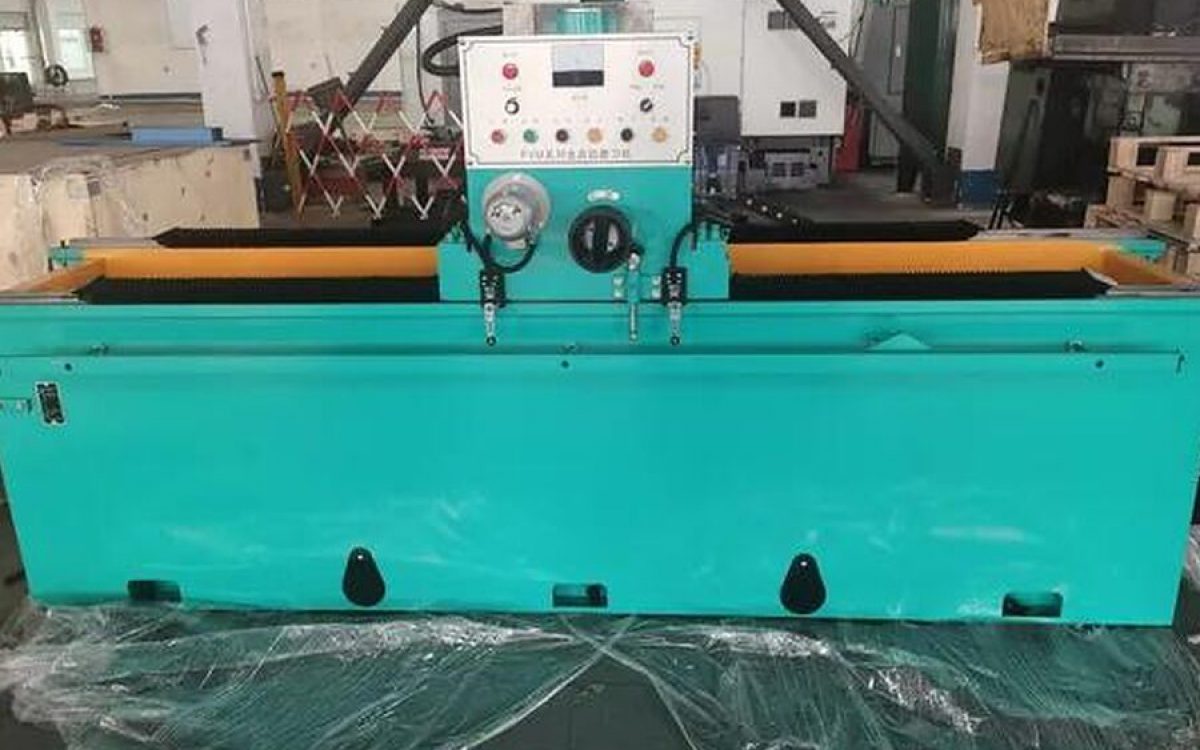
Sharpening is usually described in terms of stones and angle. What is actually happening is that the apex of the blade is being shaped at a scale smaller than most people can see, and the last two steps determine the result more than the first five. This article looks at what grinding does to the steel at that scale.
What the abrasive does
Every abrasive particle cuts a groove. The groove depth is set by the abrasive size, the pressure and the steel's resistance. At the apex, where the two faces meet, the grooves from each face intersect and determine the geometry of the very tip.
| Grit range | Typical use | Scratch depth | Effect on the apex |
|---|---|---|---|
| Coarse (100–400) | Establishing the bevel, removing damage | Deep | Leaves a heavily grooved apex; cuts aggressively, dulls fast |
| Medium (600–1200) | Refining the bevel | Moderate | Begins to reduce apex width |
| Fine (2000–4000) | Working the apex | Shallow | Apex width approaches the practical minimum |
| Very fine (6000+) | Polishing the edge | Very shallow | Reduces friction; may reduce bite on some foods |
The relationship is not linear. Going from coarse to medium reduces the apex width substantially; going from fine to very fine changes it very little but changes the friction. This is why an edge that stops at a coarse stone feels aggressive and one polished to a mirror cuts with less resistance — and why "sharper" is not a single axis.
The burr, which is the actual problem
When an edge is ground, the steel at the apex does not simply disappear. It deforms, and a thin flap of metal — the burr — forms along the edge. The burr is the single most common cause of an edge that feels sharp and does not perform.
| Burr type | Where it comes from | Behaviour |
|---|---|---|
| Initial burr | Coarse grinding, deformed metal pushed over the edge | Large, easily felt, easily removed |
| Residual burr | Not fully removed at finer grits | Feels sharp, folds over on first use, edge appears to dull instantly |
| Wire edge | A very fine, persistent burr along the whole edge | Folds and rolls; difficult to remove |
| Micro-burr / foil edge | Excessive polishing at high angle on a hard steel | Extremely keen briefly, then collapses |
Burr removal is a process decision. In production grinding, the last operation on a sharpened edge should be a deliberate burr-removal step — a light pass at a slightly higher angle, a stropping operation, or a controlled fine abrasive pass. Where a factory's process ends at the last coarse or medium pass, the knives will test sharp and be returned by customers.
How to check for a burr
- Feel both sides. Drawing a fingertip or a soft material across the edge from each side, a burr catches on one side and is smooth on the other. This requires care and is a trained skill.
- Cut soft material. A burr causes a blade to cut paper cleanly in one direction and poorly in the other, or to snag.
- Look at it. Under magnification, a burr appears as a line of brighter, deformed metal along the apex, distinct from the ground bevel.
- Use consistent lighting. A burr reflects differently from a clean apex; the difference is visible with a modest magnifier and a raking light.
What grinding does to the steel below the apex
Grinding generates heat. On a thin apex, with insufficient coolant, that heat can:
| Effect | Temperature range | Consequence |
|---|---|---|
| Tempering back | Moderate — below the tempering temperature of the steel | Small local softening; may be undetectable in a bulk hardness test |
| Over-tempering | Above the original tempering temperature | Visible softening at the edge region, exactly where hardness matters most |
| Re-hardening and self-quench | High, from a fast heavy pass | Untempered martensite at the apex — very hard, very brittle, micro-chipping |
This is why a blade can test correctly for bulk hardness and still have a bad edge. Bulk hardness is measured at a prepared location; the apex is a few thousandths of a millimetre of steel that has just been ground with no coolant and no tempering afterwards.
The controls are straightforward and cheap: adequate coolant, lighter passes at low grit, and not using worn abrasive that requires pressure. They are also the first things sacrificed under schedule pressure.
What to specify in a knife programme
| Item | Statement |
|---|---|
| Grinding sequence | The grit progression used for the primary bevel and the edge |
| Burr removal | A defined final operation, and an inspection method |
| Coolant | Required during grinding, with a check |
| Edge finish | Grit or a physical reference sample |
| Heat check | Optionally, a marker or a spot hardness check if overheating is suspected |
Why this matters commercially
Most retention complaints that are not caused by board material or dishwasher use come down to one of two things: insufficient hardness, or a burr. The first is expensive to fix — it means changing the grade or the heat treatment. The second is nearly free and is a process step.
Before accepting that a retention complaint requires a specification change, check the edge of a returned piece for a burr. Our dulling mechanisms article describes the other diagnostic paths, and the grinding process covers where this step sits in production.
FAQ
Does a higher polish always mean a better edge?
No. A polished edge cuts with less resistance and may perform better on soft foods, but a coarser edge has more bite on fibrous or tough material. For kitchen knives, a medium-fine finish often outperforms a mirror polish in practice.
Should a factory strop its knives?
Where the edge is finished on a belt or a grinding wheel, some form of final burr removal is necessary. Whether it is called stropping or a finishing pass does not matter; that it happens, and is verified, does.
Can I see a burr without a microscope?
Yes, with a loupe and raking light, and by feel with care. A 10x loupe is enough to identify a pronounced burr on most edges.
Does the burr issue get worse at higher hardness?
It changes character. Harder, more brittle steels tend to form finer, more persistent burrs that are harder to remove cleanly, which makes the finishing step more critical, not less. See heat treatment.
Looking for a kitchen knife manufacturer?
We manufacture chef knives, knife sets, Damascus and steak knives in Yangjiang with OEM and private label service. Get a quote today.
Get Free Quote → Browse Products