Knife Handle Ergonomics: Grip Types, Handle Shape and Repetitive Strain
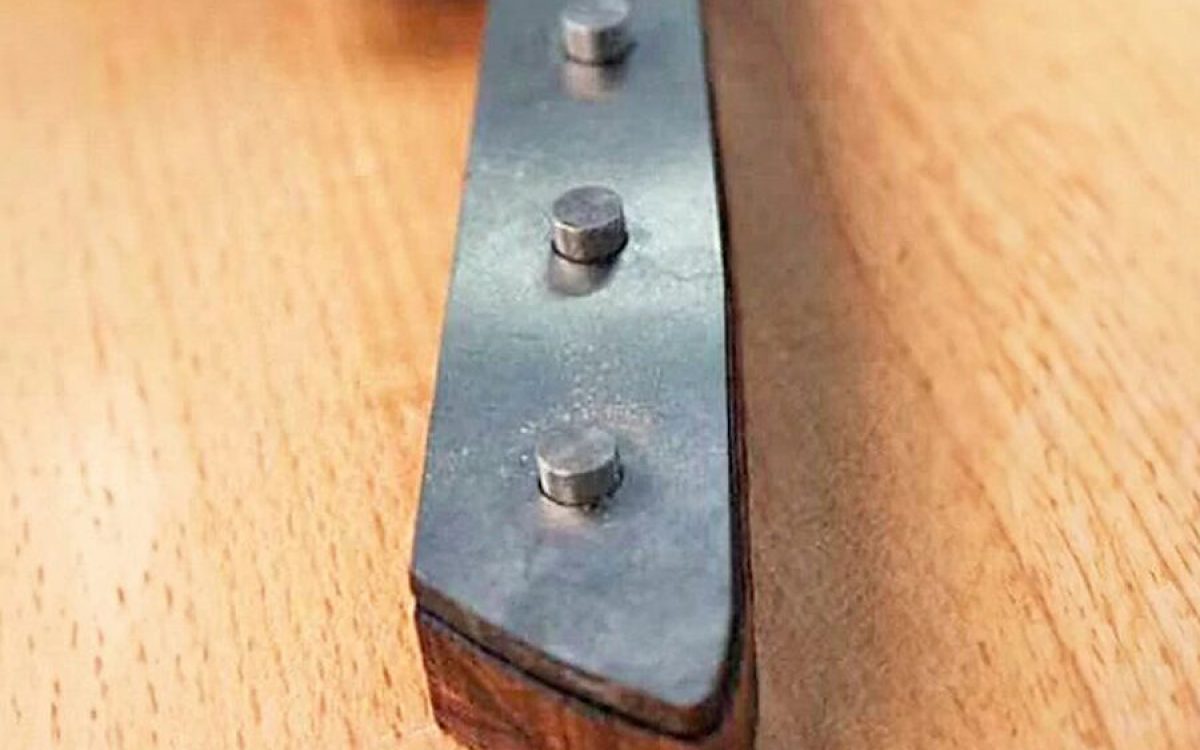
In commercial kitchens, ergonomics is not a comfort feature. It is an injury-prevention specification. Repetitive strain in the hand, wrist and forearm is a recognised occupational problem among chefs, and handle geometry is one of the controllable variables.
This article covers grip types, the handle shapes that work, and what a buyer can reasonably specify.
The grips
| Grip | Description | Implied handle requirement |
|---|---|---|
| Pinch grip | Thumb and index finger pinch the blade just ahead of the bolster | Requires a smooth transition from blade to handle; a sharp bolster edge is painful |
| Hammer grip | Hand around the handle behind the bolster | Full-length handle with sufficient diameter |
| Finger-on-spine | Index finger extended along the spine | A spine that is not sharp, and a handle that does not force the finger into position |
| Racquet / cleaver grip | Hand around the handle with the blade in line | A straight handle, often with a flared end |
The pinch grip is the grip most professional users are trained to use and the one that most factory handles are not designed around. The consequence is that a bolster with a hard corner, or a blade-handle junction with a raised shoulder, causes pressure on the index finger over a shift.
Handle geometry that works
| Feature | Function | Failure if wrong |
|---|---|---|
| Cross-section shape | Should fill the palm without pressure points; oval or rounded rectangular generally works | Square or too-round sections concentrate pressure |
| Diameter | Should suit the intended hand size range | Too small causes grip force; too large reduces control |
| Length | Should accommodate the whole hand plus a margin | Short handles force the little finger off the end |
| Blade-to-handle transition | Smooth, no step or ridge | A step digs into the index finger in a pinch grip |
| Bolster geometry | Rounded at the leading edge | A sharp bolster corner causes pressure injury |
| Taper and swell | Light swell toward the front gives an index reference | Excessive swell reduces grip options |
| Surface texture | Enough grip when wet without abrasiveness | Smooth handles slip when wet; very coarse texture abrades |
| End shape | Flared or angled to prevent the hand slipping off | Straight ends allow the hand to slide back in a wet grip |
Wet grip, which is the real kitchen condition
A handle tested dry tells you very little. In use it will be wet, possibly greasy, and possibly cold. The relevant performance question is whether the hand can maintain grip without excessive force, because grip force is the mechanism of most strain injuries.
| Material | Dry grip | Wet grip | Notes |
|---|---|---|---|
| Polished wood | Adequate | Poor | Slippery when wet; improves slightly when the finish wears |
| Textured wood | Good | Moderate | Texture helps; wood absorbs moisture |
| Moulded PP / ABS | Moderate | Moderate to poor | Depends on surface texture; can be designed |
| Overmoulded TPR / TPE | Good | Good | The best wet grip available at volume, if bonded well |
| G10 / Micarta | Good when textured | Good | Polished versions are slippery; texture is essential |
| Metal | Moderate | Poor unless textured | Also affected by temperature |
Handle handedness and symmetry
Most production handles are symmetric, which suits 90 percent of users. Symmetric handles are cheaper, fit either hand and simplify tooling. Asymmetric handles can reduce strain for a defined grip but require knowing which hand and which grip, and they double the tooling if both hands are to be served.
Extreme shapes marketed as ergonomic are worth treating with care. A handle with a pronounced finger groove locks the hand into one position; if that position suits the user, it helps, and if it does not, the same handle becomes the source of the complaint. Mild asymmetry and a smooth transition generally serve a wider population than aggressive contouring.
What to specify
| Item | Statement |
|---|---|
| Handle cross-section drawing | With dimensions and tolerances |
| Handle length and diameter | With tolerances |
| Blade-to-handle transition | A maximum step height, verified against a sample |
| Bolster leading edge | Specified radius |
| Surface finish | Texture specification, verified wet as well as dry |
| End treatment | Flare or angle where the market uses a hammer grip |
The blade-to-handle transition is the parameter most often left loose and most likely to cause a complaint, because it is invisible in a product photo and immediately obvious in a pinch grip. Where a programme sells into professional or serious home-cook segments, it is worth specifying a maximum step.
FAQ
Are moulded handles less ergonomic than wood?
No. Moulded handles can be produced in any cross-section, including shapes that wood cannot be economically formed into. The material and the shape are separate decisions.
Does a heavier knife cause more strain?
Weight and balance together determine strain, and balance is often the larger factor. A blade-heavy knife requires wrist effort to control; a neutral or handle-heavy knife of the same mass is easier to hold for long periods. See weight and balance.
Should I offer multiple handle sizes?
Where a market includes a wide range of hand sizes and the volume justifies the tooling, offering a smaller and a larger handle can be a genuine differentiator. It is a cost decision, not a design one.
How do I test ergonomics without a user trial?
You cannot fully, and a small user trial with actual cooks is inexpensive relative to the cost of a range that feels wrong. The minimum is to check the transition step, the bolster radius and the wet grip on a sample — see sampling.
Looking for a kitchen knife manufacturer?
We manufacture chef knives, knife sets, Damascus and steak knives in Yangjiang with OEM and private label service. Get a quote today.
Get Free Quote → Browse Products