Budgeting a Kitchen Knife New Product Development Project
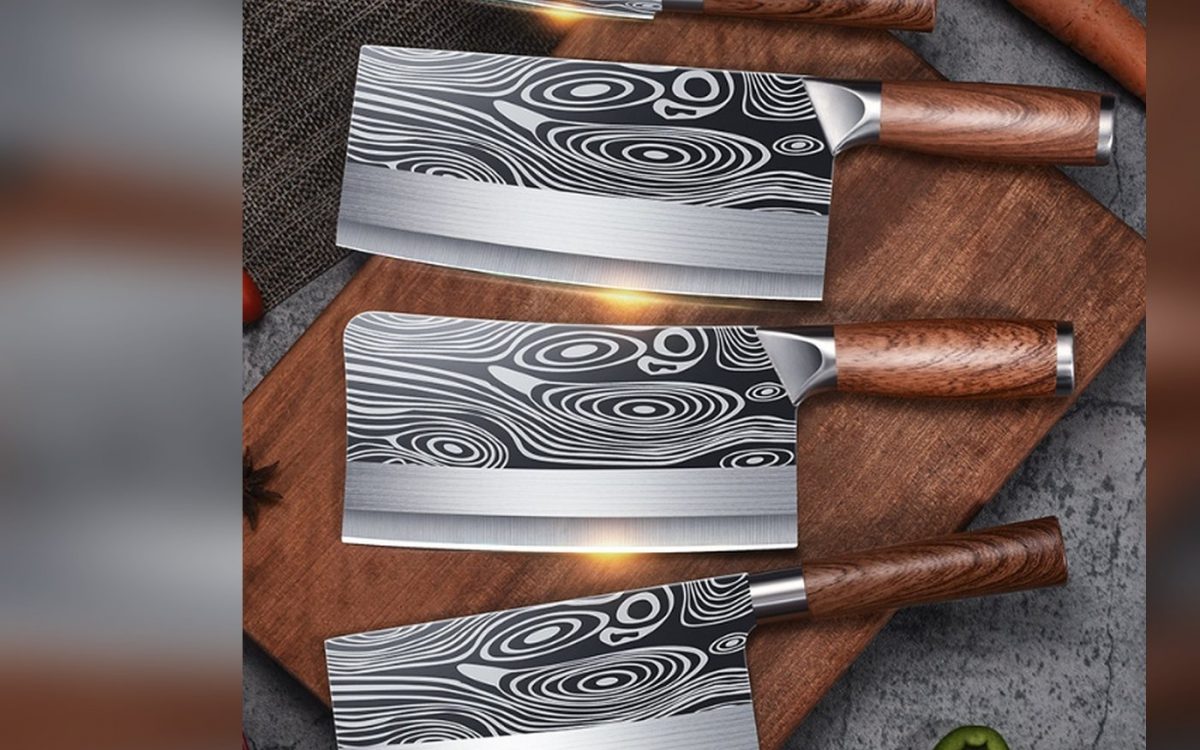
A new kitchen knife product costs money before the first saleable unit exists. Most of that cost is not the knife. Understanding the pre-order cost structure makes it possible to budget realistically and to decide which changes are worth pursuing.
Figures below are ranges to prompt estimation, not quotations.
The pre-order cost elements
| Element | Typical range | One-off or per round |
|---|---|---|
| Design and drawing work | Low to moderate | One-off |
| Blade tooling (stamping die or forging die) | Moderate to significant | One-off per tool |
| Handle tooling (mould) | Moderate | One-off per mould |
| Prototype samples | Low per round | Per round |
| Production-intent samples | Low to moderate | Per round |
| Packaging structural design and dieline | Low to moderate | One-off |
| Printing plates | Moderate | One-off per colour per design |
| Transit testing | Moderate | One-off, and after each structural change |
| Hardness and dimensional verification | Low | Recurring |
| Food contact / migration testing | Moderate to significant | One-off per article per market, then periodic |
| Dishwasher or performance testing | Moderate | One-off per article |
| Certification or conformity assessment | Market dependent | Per market |
| Sample freight and courier | Low but recurring | Per round |
| Your own time | Frequently unbudgeted | Real |
The three cost tiers
| Tier | What it involves | Relative cost |
|---|---|---|
| A. Existing product, new brand | Marking, packaging artwork, small pack tooling | Lowest — the fastest route to market |
| B. Existing blade platform, new handle or pack | Handle tooling, new packaging, limited testing | Moderate |
| C. Fully new blade and handle | Full tooling, multiple sample rounds, complete test set | Highest — and the slowest |
Most first programmes should start in tier A or B. Tier C is justified when the design is genuinely a source of differentiation, not simply because a new shape seemed interesting. The difference in cost between tiers is usually larger than the difference in sales potential.
Where the cost is really spent
- Tooling is the largest single one-off. It is also the part most often under-quoted, because it is easy to describe a die in principle and harder to make one. Confirm the amount, the ownership and who pays for modification — see tooling costs.
- Testing multiplies by market. A product for the EU, the US and Japan may need three test programmes. Budget per market, not per product. See market compliance.
- Packaging print plates are per colour. A six-colour carton has six plates on each side. Changing artwork after plates are cut means new plates — which is why artwork approval has its own milestone.
- Sample rounds are cheap individually and expensive in aggregate. Three rounds of samples plus courier plus your review time is a real number, and each round also costs calendar time.
Amortisation: how the one-off costs affect unit price
| Tooling cost | At 2,000 pcs | At 10,000 pcs | At 50,000 pcs |
|---|---|---|---|
| Illustrative: 3,000 | 1.50 per pc | 0.30 per pc | 0.06 per pc |
| Illustrative: 8,000 | 4.00 per pc | 0.80 per pc | 0.16 per pc |
Whether to amortise or pay upfront is a decision about risk. Paying upfront keeps the unit price clean and gives you clear ownership; amortising reduces the entry cost but creates an obligation if the volume never arrives. For a first product where demand is uncertain, paying separately is usually the better trade even though the cash outlay arrives earlier.
Building the budget
| Step | Action |
|---|---|
| 1 | Decide the tier — A, B or C — before requesting costs |
| 2 | Fix the target markets, because testing scope follows from them |
| 3 | Request tooling, sample and plate costs as separate line items |
| 4 | Request test scope and cost per market from a laboratory, not from the factory |
| 5 | Add the trial order cost, including freight, at the small-quantity rate |
| 6 | Add your own internal time as a real line |
| 7 | Add a contingency for one extra sample round and one artwork revision |
The contingency line is not padding. One additional sample round and one artwork revision is the normal outcome, and budgeting zero for them is what makes NPD projects look cheap and then not be. See the sampling SOP for how to reduce the number of rounds.
FAQ
How long does an NPD project take?
For tier B, weeks to a few months from decision to first order, depending on tooling lead time and testing scope. Tier C with multiple sample rounds and multi-market testing can run considerably longer.
Can the factory absorb the tooling cost?
Yes, usually as amortisation into unit price, which means you may not own it. See IP and ownership.
Should I test in every market before launch?
Test in the markets you are launching into. Testing a market you may enter later is a cost with no near-term return, and test requirements change over time.
What is the most commonly underestimated line?
Packaging — structural design, plates and transit testing combined — followed by the testing programme across multiple markets. Both are frequently left out of an early budget.
Looking for a kitchen knife manufacturer?
We manufacture chef knives, knife sets, Damascus and steak knives in Yangjiang with OEM and private label service. Get a quote today.
Get Free Quote → Browse Products