Kitchen Knife Types: A Complete Reference from Chef's Knife to Cleaver
A kitchen knife range is a design decision expressed as a list of blade shapes. Understanding what each type is for makes it possible to build a coherent set rather than a collection, and to know which items a market actually needs.
This reference covers the principal types with their typical dimensions and intended use.
The core types
| Type | Typical blade length | Blade character | Primary use |
|---|---|---|---|
| Chef's knife (French pattern) | 200–260 mm | Curved edge, pointed tip, deep heel | General purpose: chopping, slicing, rocking |
| Gyuto (Japanese chef's knife) | 180–240 mm | Flatter profile, thinner behind the edge | General purpose, precision slicing |
| Santoku | 165–180 mm | Sheep's-foot profile, flat edge, thin | Vegetables, general home use; less suited to rocking |
| Nakiri (vegetable knife) | 165–180 mm | Rectangular blade, straight edge | Vegetables; clean vertical cuts |
| Utility knife | 120–150 mm | Scaled-down chef's profile | The in-between tasks |
| Paring knife | 75–100 mm | Short, often with a pointed tip | Peeling, trimming, in-hand work |
| Boning knife | 130–150 mm | Narrow, flexible blade | Working around bone and joints |
| Fillet knife | 150–230 mm | Long, narrow, flexible | Filleting fish |
| Bread knife | 200–250 mm | Serrated or scalloped edge | Bread, pastry, tomatoes |
| Carving / slicing knife | 200–300 mm | Long, narrow, often with a granton edge | Roasts, large cuts |
| Steak knife | 110–130 mm | Pointed or rounded, often serrated | Table service |
| Table / butter knife | 180–220 mm | Blunt edge or rounded tip | Spreading, table service |
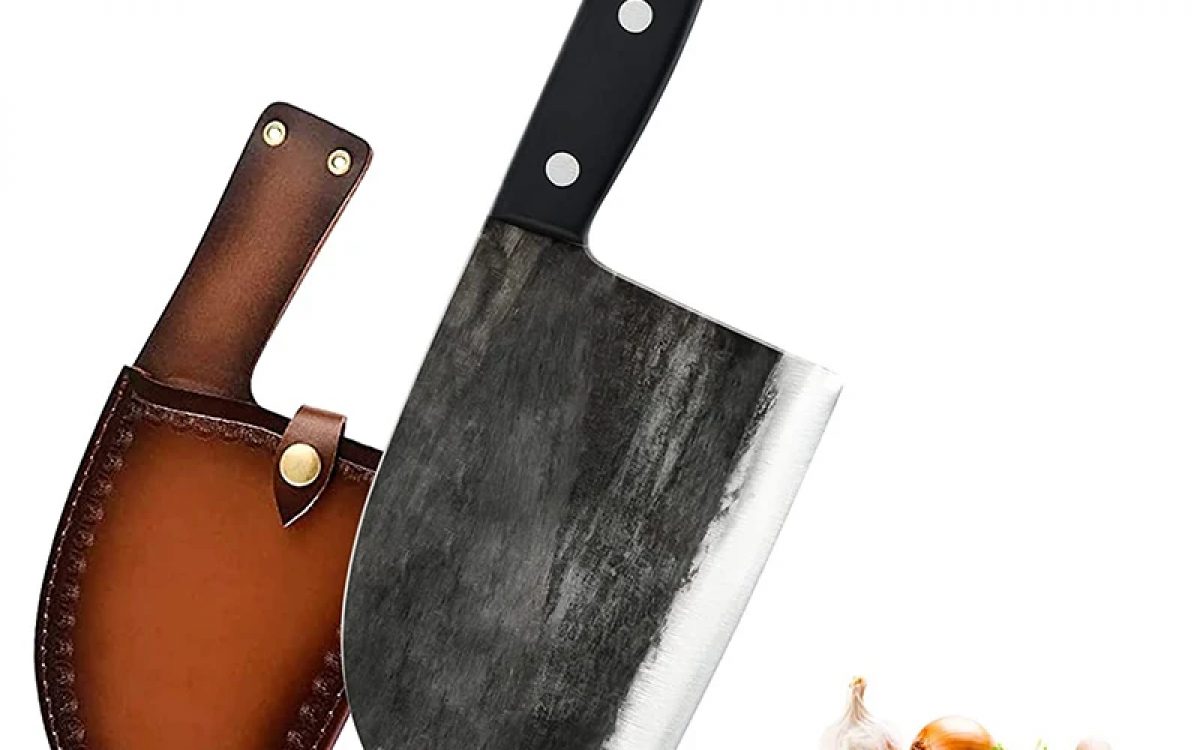
| Cleaver / Chinese chopper | 180–230 mm (tall) | Deep rectangular blade | Chopping, scooping, crushing |
| Butcher's knife | 250–320 mm | Heavy, stiff, curved | Breaking down large cuts |
| Kitchen shears | — | Heavy-duty, often with a notch | Poultry, herbs, packaging |
Geometry differences that matter more than length
| Feature | European pattern | Japanese pattern |
|---|---|---|
| Edge curvature | Pronounced curve for rocking | Flatter for push or draw cuts |
| Blade thickness at spine | Thicker, heavier | Thinner, lighter |
| Thickness behind the edge | Greater | Less — thinner geometry, keener cutting |
| Tip | Often upswept | Often straighter, sometimes a curved kiritsuke profile |
| Hardness | Typically mid-range | Typically higher |
| Angle | Wider included angle | Narrower included angle |
| User technique implied | Rocking chopping | Push cutting, draw slicing |
This is the most consequential distinction in knife design, and it is the reason a knife marketed as a "gyuto" with a thick European geometry disappoints. The name carries an expectation; the geometry has to deliver it. See grind types.
Building a coherent set
| Set tier | Composition | Logic |
|---|---|---|
| Starter / 3-piece | Chef's or santoku, paring, utility or bread | Covers the majority of home tasks |
| Standard / 5-piece | Adds bread and utility or boning | Broad home coverage; the common retail configuration |
| Comprehensive / 6–8 piece | Adds carving, boning, shears, sometimes a block | Gift and premium positioning |
| Professional | Chef's, paring, boning, fillet, bread, slicer | Task-led rather than presentation-led |
| Steak set | 4–8 matching steak knives, sometimes with a block | Table and gift channel |
| Asian cook's set | Chinese cleaver, slicer, sometimes a nakiri | Region-specific; strong in some markets |
Two observations from retail ranges: a set sells better than the same knives individually, and a set with a redundant item still sells better than a smaller set that appears to offer less. The second is a marketing fact that a product engineer may resist, and it explains the presence of items nobody uses.
A well-constructed set avoids genuine redundancy — three knives of nearly the same length in the same geometry is a cost with no function. Assign each blade a distinct length and geometry band. See set combination design.
Serrated versus plain edges
| Aspect | Plain edge | Serrated edge |
|---|---|---|
| Cutting quality on soft food | Excellent when sharp | Good, and it does not need to be sharp |
| Cutting hard crust or skin | Requires a sharp edge | Advantage — it bites without pressure |
| Sharpening at home | Straightforward | Difficult; usually professional |
| Edge life as perceived by the user | Noticeable decline | Apparent life is long because the serrations still bite |
| Manufacturing cost | Lower | Higher — an extra operation, and harder to control |
| Best use | Chef's, paring, slicing | Bread, steak, tomatoes in some markets |
Serrated knives are disproportionately important in table knives because the perceived edge life is long and because the cutting task — meat on a plate — suits them. They are also the most frequent sharpening complaint, since almost nobody can restore a serration at home. Both facts point the same way: sell serrated where the cut suits it, and be honest in the care guidance about sharpening. See care guidance.
FAQ
What is the single most important knife in a range?
The chef's knife or its regional equivalent. It accounts for the majority of use in most kitchens, and it is the one on which the brand is judged.
Is a santoku a substitute for a chef's knife?
For many home users, yes. It is shorter, flatter and often thinner. It is less suited to rocking and to heavy tasks, which is why professional ranges usually include both patterns.
Are granton edges functional or decorative?
They reduce adhesion on sticky foods such as cheese and cucumber, which is a genuine if modest benefit. They do not make a knife sharper, and they add a manufacturing operation — see cutting operations.
How many knives does a home cook need?
Three: a chef's knife or santoku, a paring knife and a serrated knife. Everything else is a refinement. That is a useful fact when positioning a set — the extra items should be positioned as convenience rather than necessity.
Looking for a kitchen knife manufacturer?
We manufacture chef knives, knife sets, Damascus and steak knives in Yangjiang with OEM and private label service. Get a quote today.
Get Free Quote → Browse Products