Inside the Yangjiang Cutlery Cluster: Capacity, Upstream Suppliers and Timelines
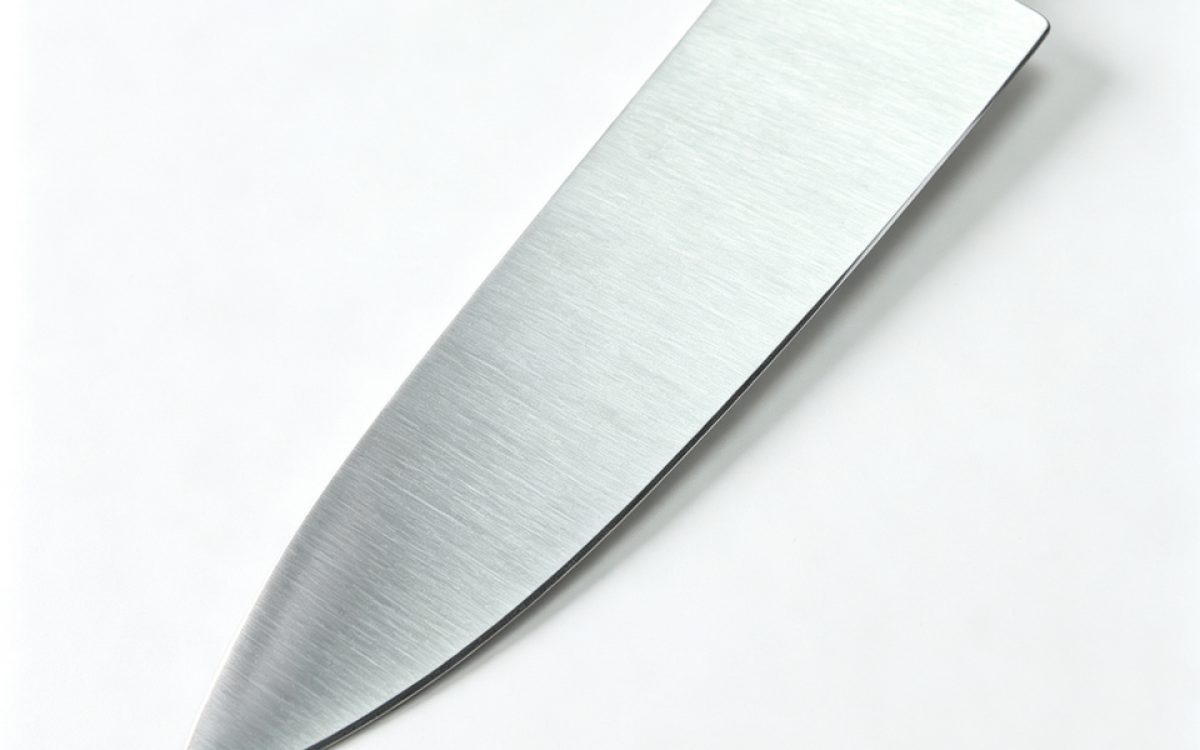
Yangjiang in Guangdong province is the dominant centre of Chinese kitchen knife manufacturing, and has been for decades. Understanding what the cluster controls — and what it does not — is useful for any buyer specifying a programme, because it explains why some questions get fast answers and others do not.
This article describes the structure of the cluster, the upstream and downstream dependencies, and the practical implications for scheduling and quality.
Why the cluster formed
Cutlery manufacturing is a set of specialised steps: blanking, forging, grinding, heat treatment, polishing, handle production, assembly. Each step has its own equipment, its own skill and its own economics. Locating them together reduces transport between steps and, more importantly, makes it possible to subcontract a single operation when a line is full.
Three conditions made Yangjiang the location:
- An early start in metalworking, which built a base of toolmakers and grinding skills
- Proximity to sourcing — steel supply, abrasives, handle materials, packaging, all available locally
- Port access through the Pearl River Delta, with the deep-water capacity to ship containers directly
The result is a cluster where a buyer can have a knife designed, tooled, produced, packed and shipped without leaving the region, and where a small order can be made by a factory that subcontracts the operations it does not run in house.
What the cluster controls
| Element | Degree of local control | Practical implication |
|---|---|---|
| Blade forming (stamping, forging) | High | Fast tooling turnaround, many capable suppliers |
| Heat treatment | High, with wide variance in capability | The single biggest quality differentiator between factories |
| Grinding and finishing | High, partly manual | Labour-intensive; quality depends on operator skill and supervision |
| Handles (moulded, wood, composite) | High | Moulding tooling made locally and quickly |
| Packaging | High | Printing, die-cutting and box making available in the region |
| Abrasives | Partly | Some consumables imported |
| Premium steel grades | Partly | Higher-end grades are mill-sourced, sometimes imported |
The heat treatment row deserves emphasis. Almost every factory in the cluster can run a hardening line. Far fewer can demonstrate that the line produces a consistent result on a specific steel with a documented curve and a periodic verification routine. This is where two quotations for apparently identical specifications diverge, and it is the subject of our article on reading an HRC report.
What the cluster does not control
Steel mill supply
Blade steel is a mill product. Cutlery factories buy coil, strip or bar from mills and distributors, and their exposure to mill pricing, allocation and lead time is passed on to the buyer. When a mill constrains supply of a grade, every factory in the cluster faces the same constraint at the same time — see steel price volatility.
Freight and shipping capacity
Container availability, freight rates and sailing schedules are set outside the region. A factory can hit its production date and still miss the vessel.
Export market regulation
Compliance applies at the destination. A factory can test to a standard, but the legal duty sits with the importer — as set out in compliance liability in private label.
Labour availability
Grinding and polishing are skilled, physically demanding trades. The cluster competes for that labour with other sectors and this is a structural pressure on cost and on lead time during peak season.
Factory types you will meet
| Type | Profile | Best suited to |
|---|---|---|
| Large integrated factory | Owns forming, heat treatment, grinding, assembly, often packaging | Volume programmes with strict compliance and audit needs |
| Mid-size specialist | Strong in one or two operations, subcontracts the rest | Mid-volume private label, specific constructions |
| Assembly and trade house | Buys finished blades or knives, assembles and packs | Fast turnaround, low tooling, but less control over the blade |
| Workshop | Hand processes, small batches | Sampling, artisan-style products, small runs |
| Trading company | No production; sources from the above | Convenience, but adds a layer between you and the process |
The trade house and trading company categories are the ones that create confusion about capability. A trading company can quote anything; whether it controls production is a different question. Our capacity verification article covers how to establish which type you are dealing with.
Practical implications for a buyer
- Ask which operations are in-house. Not as a trick question — the answer determines where quality risk sits.
- Ask who runs the heat treatment and how it is verified. The most important single question in a cutlery supply chain.
- Expect cluster-wide effects. Peak season and steel tightness affect everyone at once; a factory promising an unusually short lead time in a busy period is a warning, not an advantage.
- Visit if the volume justifies it. A cluster visit makes the difference between factory types visible in an hour, and the checklist is in our factory audit guide.
FAQ
Is everything really made in Yangjiang?
No. The cluster is the largest concentration but not the only source. Other regions produce cutlery, and components such as moulded handles or packaging can come from elsewhere in the province.
Does cluster location affect quality?
Not directly. What affects quality is heat treatment control, grinding accuracy, incoming material verification and in-process discipline. Those vary enormously between factories in the same town — see in-process quality control.
Can I get a small order made?
Usually yes, with higher unit cost. The constraint is usually tooling and setup rather than capacity — see small trial orders.
How do I compare two factories in the same cluster?
Compare their process control, not their price list: heat treatment records, incoming material verification, in-process checks, inspection equipment. Price differences usually trace back to one of those four.
Looking for a kitchen knife manufacturer?
We manufacture chef knives, knife sets, Damascus and steak knives in Yangjiang with OEM and private label service. Get a quote today.
Get Free Quote → Browse Products