Knife Handle Materials Compared: Pakka Wood, G10, Micarta, ABS, PP and Natural Wood
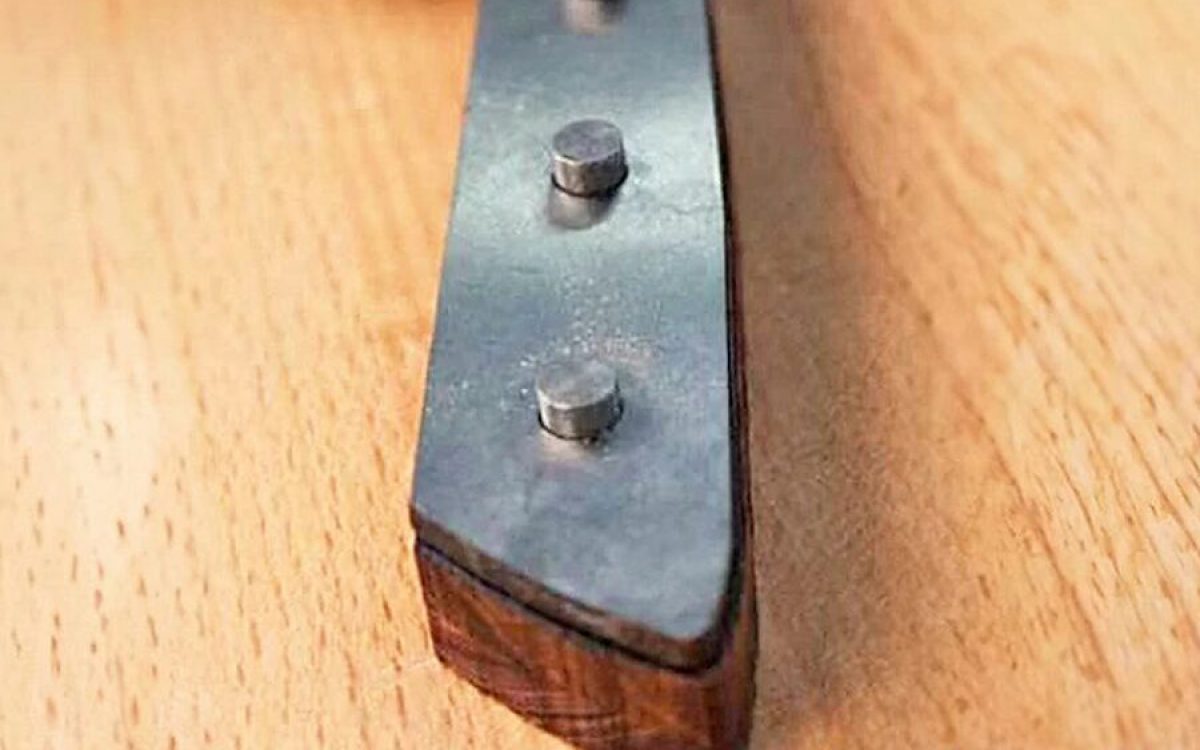
Handle material is the second most discussed specification after steel and the least well understood. Buyers pick it on appearance, then discover that the material decides whether the knife survives a dishwasher, whether the scales stay tight after a year, and whether the handle can be decorated at all.
This guide compares the materials that actually appear on production kitchen knives.
Comparison table
| Material | What it is | Water / heat | Cost | Best for |
|---|---|---|---|---|
| Pakka wood | Layers of wood veneer impregnated with resin (usually phenolic) and compressed into a block, then cut into scales | Good — stable and largely sealed | Low to moderate | Mainstream and premium lines; the industry default for a wood look that survives real use |
| Solid wood (rosewood, walnut, ebony, olive) | A single piece of timber, finished with oil or lacquer | Poor to moderate — moves with humidity, can split or lift if soaked | Moderate, varies with species | Premium and artisan knives used and dried by hand |
| G10 / FR-4 | Woven glass fibre cloth bonded with epoxy resin under pressure | Excellent — essentially unaffected by water and heat | Moderate to high | High-durability lines; can be produced in colours and contoured patterns |
| Micarta | Fabric, canvas, linen or paper layers bonded with phenolic or epoxy resin | Very good — similar to G10 with a warmer look | Moderate to high | Premium handles wanting texture and a less clinical look than G10 |
| ABS injection moulded | Thermoplastic moulded directly onto the tang | Good, though softens at higher dishwasher temperatures | Lowest | Volume ranges, fully sealed hygienic handles |
| PP (polypropylene) moulded | Thermoplastic moulded onto the tang | Very good — higher softening point than ABS | Low | Foodservice, dishwasher-heavy settings |
| TPR / rubber over-mould | A soft elastomer layer over a rigid core | Good | Low | Grip-focused consumer lines, budget comfort handles |
| Die-cast metal | Zinc alloy or stainless cast around a short tang | Excellent | Moderate | A seamless, weighty feel; common on premium-looking mass-market knives |
| Stainless steel scales | Metal handle fixed to a full tang | Excellent, but slippery and cold | Moderate to high | Design-led lines, steak knives |
Pakka wood, in more detail
Pakka wood deserves a longer note because it is the material most buyers end up specifying without knowing what they bought. It is a composite: thin veneers of wood are stacked with resin, then pressed under heat and pressure so the resin fills the wood structure. The resulting block is dimensionally stable, takes a polish, and can be produced in colours and grain patterns.
Two practical points:
- It is not solid wood, and it must not be described as such. Retailers and marketplaces treat a "wood" claim on a composite differently, and a misleading material claim is a legal exposure in the EU and UK.
- Food contact compliance applies to the resin, not only the wood. Phenolic resin systems have specific migration considerations under EU food contact rules and require conformity data. Ask for it — see our compliance guide.
Wood handles: why they fail
Solid wood fails in three predictable ways, and all three are avoidable in a well-made knife:
- Water ingress. If the wood is not sealed at the end grain and around the rivets, water wicks in, the fibres swell, and the surface lifts. Repeated cycles open a gap at the tang.
- Dishwasher heat. Domestic dishwasher cycles combine heat, detergent and prolonged wetting. That is the most hostile environment a wood handle will meet, and most wood handles are not designed for it.
- Surface drying and cracking. Wood that is repeatedly wetted and dried without oiling loses its finish and develops checks.
The fix is not exotic: a properly sealed and stabilised handle, flush-fitted scales with no gaps, and clear usage guidance. Note that stabilised wood — timber impregnated with resin under vacuum — behaves much more like Pakka wood and should be described as a stabilised wood, not as raw timber.
G10 and Micarta: the durability choice
G10 is the strongest commonly available handle material. Glass fibre layers in epoxy give it excellent resistance to water, heat, most chemicals and impact, and it can be produced in any colour with contoured patterns that feel grippy when wet.
Two notes for anyone specifying it:
- Machining matters. G10 is abrasive to tooling and produces fine dust during grinding and finishing. Production requires dust control, which is a genuine cost and a legitimate question to ask about in an audit.
- It can look industrial. That is either the point or a problem, depending on the brand. Micarta answers the same durability question with a warmer, more tactile finish and is the usual choice where the brand wants craft character with dishwasher tolerance.
Moulded handles: the underrated option
An injection-moulded PP or ABS handle is bonded directly to the tang, giving a fully sealed, seamless surface with no joints for water or bacteria to enter. That is a genuine hygiene advantage and a real cost advantage. The trade-offs are aesthetic (moulded plastic signals a lower tier to some consumers) and structural (the tang is typically short, so the handle cannot be repaired).
PP is the better choice where dishwasher cycles are frequent, because it retains its shape at higher temperatures than ABS. Our construction guide explains what the short tang means for durability.
Matching material to use case
| Use case | Recommended | Why |
|---|---|---|
| Mass-market retail, dishwasher use expected | PP or ABS moulded; Pakka wood only if the wood is fully sealed | Heat and prolonged wetting are the killers, and moulded handles handle both |
| Gift and premium consumer sets | Pakka wood or Micarta | Warm appearance, consistent grain, still tolerant of real kitchen use |
| Chef and professional lines | G10, Micarta or stabilised wood | Durability, grip when wet, tolerance of heavy use |
| Artisan, hand-wash only | Solid wood with oil finish | Warmth and character, with usage guidance supplied |
| Foodservice and catering | PP moulded or die-cast | Hygiene, dishwasher survival, low replacement cost |
| Table and steak knives | Stainless, die-cast or ABS | Appearance with minimal maintenance |
What to put in the specification
- Material by its proper name — Pakka wood, stabilised wood, G10, Micarta, PP, ABS. Not "wood" or "resin".
- Construction: full tang with scales and how many rivets, or moulded to the tang.
- Rivet material and finish.
- Whether the handle is rated for dishwasher use, and the maximum temperature tested.
- Food contact conformity for any resin or plastic component, referencing the applicable regulation.
- Hand-finish standard: flush scales, no gaps, no proud rivets.
Our OEM and ODM process fixes these details before tooling, and our inspection guide covers how to check handle integrity on a finished order.
FAQ
Is Pakka wood real wood?
It contains wood, but it is a resin-impregnated composite rather than a solid timber handle. Describe it accurately; the distinction matters for both marketing compliance and customer expectations.
Will a wood handle survive a dishwasher?
Typically not well, unless it is a resin-impregnated composite. Solid wood is best treated as hand-wash only, and the product should say so plainly.
Which handle lasts longest?
G10 and Micarta, followed by quality moulded thermoplastics. The failure mode of a good handle is almost never the material — it is the joint or the fit, which is why assembly quality matters as much as the material choice.
Can handles be customised with a brand?
Yes — coloured resins, engraved end caps and inlaid logos are all available, but each adds tooling or hand work. See MOQ and tooling costs for how customisation affects the minimum order.
Looking for a kitchen knife manufacturer?
We manufacture chef knives, knife sets, Damascus and steak knives in Yangjiang with OEM and private label service. Get a quote today.
Get Free Quote → Browse Products