Real Damascus vs Pattern-Welded vs Laser-Etched: How to Tell Them Apart
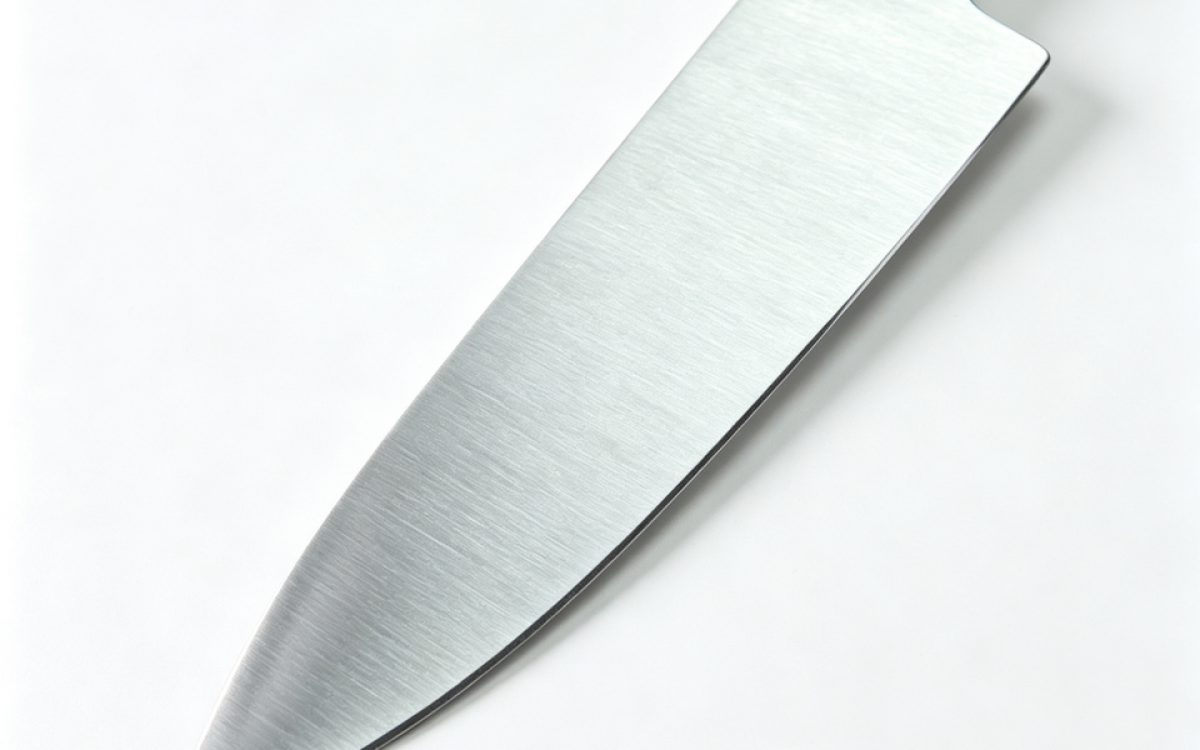
"Damascus" is used on kitchen knife listings to mean at least three different things. One is a genuine layered steel construction that costs real money to make. One is a modern powder-metallurgy material with a real pattern and excellent performance. One is a decorative surface etch on a single piece of ordinary steel that adds almost nothing to the cost.
For a buyer, confusing them is a pricing error at best and a misrepresentation claim at worst. Here is how to tell them apart, and what to ask.
First, a naming problem that is genuinely old
Historically, Damascus steel meant wootz — crucible steel made in South Asia and the Middle East with a characteristic banded pattern formed by its internal carbide structure. That process was lost centuries ago, and essentially no modern knife is made from it.
What the industry sells as Damascus today is pattern-welded steel: a stack of alternating steel plates forge-welded together into a billet, then folded and drawn out repeatedly so the layers multiply, and finally acid-etched because the different alloys react differently to acid and reveal the pattern. Purists call this "Damascus-pattern" or "layered steel" rather than Damascus. The industry calls it Damascus. Both usages exist, and the honest position for a supplier is to describe the actual construction: forge-welded layered steel.
The three things being sold
| Forge-welded layered steel | Powder-metallurgy Damascus | Etched pattern on single steel | |
|---|---|---|---|
| What it is | Two or more different steels stacked, forge-welded and folded | Two gas-atomised powders with different compositions, consolidated into a billet and forged | One piece of ordinary steel with a pattern applied to the surface |
| Is there a real layered structure? | Yes, through the thickness | Yes, and very cleanly bonded | No — the pattern is a few microns deep |
| Typical layer count | Often quoted as 33, 67, 110 or more, depending on folding | Often hundreds of nominal layers | Not applicable |
| Performance impact | Core steel decides it; cladding is cosmetic and protective | Good to excellent, since the materials are modern high-alloy steels | None. Same steel as a plain blade |
| Cost impact | Significant — material and labour intensive | Highest | Minimal — a surface step |
| Corrosion behaviour | Depends on layer alloys; carbon-rich layers in a mix can promote etching and staining at the layer boundaries | Usually good, both powders are stainless | Same as the base steel; the etch can be a corrosion initiation site if poorly neutralised |
Where the pattern actually comes from
- Forge-welded: the pattern is the cross-section of the layers intersecting the grinding plane. Because the billet is manipulated — twisted, cut and restacked, laddered — the layer lines form the visible motif. Grinding deeper reveals a different view of the same layers, which is the key forensic point later on.
- Powder metallurgy: the layers are extremely uniform because the powders are atomised and blended before consolidation. Patterns can be highly controlled. This is why powder Damascus often looks more refined — and why "the pattern is too uniform to be real" is bad advice.
- Etched: the pattern is applied by laser or by a chemical resist process. It is a surface decoration. There is no layer structure to reveal.
How to tell them apart, practically
| Check | Forge-welded / powder | Etched decoration |
|---|---|---|
| Look at the edge | Layer lines continue into and through the sharpened bevel | The pattern fades or stops before the edge; the bevel is plain steel |
| Look at the spine and any exposed tang | Layers visible as a banded cross-section | Plain steel with no banding |
| Compare a ground area | Pattern shifts gradually with the grind depth, following the layer geometry | Pattern is identical everywhere and has no depth |
| Feel the surface | Smooth — the pattern is in the material, and a well-finished blade is flat over it | Can feel slightly tactile if the etch is deep |
| Look at the transition to the bolster or a plunge line | Layers appear truncated cleanly, still visible | Pattern can appear to be a decal-like layer sitting on top |
The single most reliable check for a person without a microscope is the edge test: real layered steel keeps its pattern all the way to the apex because the apex is ground from the same billet. An etched blade loses its pattern at the bevel, because the bevel was ground after the decoration was set — or because the pattern was only ever skin deep.
Why this matters commercially
- Price. Forge-welded and powder Damascus carry a real material and labour premium. An etched blade should not. If a supplier quotes a Damascus premium on an etched product, the buyer is paying for a surface treatment.
- Performance claims. A pattern has no effect on edge retention. What cuts is the core steel and the geometry — see steel grades and edge geometry.
- Legal risk. Describing an etched blade as "Damascus steel" in a market with misleading-advertising rules is a documented exposure. The safe wording is specific: "forge-welded layered steel", "Damascus-pattern", and, where relevant, "pattern etched" if that is what it is. German law, for instance, addresses misleading descriptions of goods directly, and the same principle appears across EU consumer law.
- Corrosion. Layer boundaries in a mixed-alloy billet are exactly where a knife will stain or pit if the etch was not fully neutralised. A fair question to ask is the passivation and neutralisation procedure after etching.
Questions to put to a supplier
- Is the blade forge-welded layered steel, powder-metallurgy Damascus, or a single steel with a pattern applied?
- If layered: how many layers, and which two alloys? What is the core steel, and what hardness is the core taken to?
- Is the core exposed at the edge, or is the edge entirely cladding?
- What is the etch and neutralisation process, and is there any corrosion test data?
- Can you supply a photograph of the blade cross-section or of the spine showing the layer banding?
The answer to question five is the one that separates suppliers. Anyone selling genuine layered steel can photograph the banding at the spine in minutes. A supplier working with etched decoration will change the subject.
Handling layered steel as a product
- Corrosion care matters more than on plain stainless. Instruct the customer to dry the blade and avoid leaving it wet, particularly if the layer alloys include a carbon-rich steel.
- Sharpening exposes fresh material and the pattern will reappear on the new bevel — a genuine, checkable feature you can use in marketing honestly.
- Consistency between units varies more than with plain steel, because the pattern depends on how the billet was manipulated. Buyers of large programmes should expect the pattern to vary slightly piece to piece and should decide in advance whether that variation is acceptable — it is a feature of the process, not a defect.
Our Damascus and Japanese knives range shows the profiles available, and our OEM process covers how core steel, hardness and pattern are specified together.
FAQ
Is Damascus steel stronger or sharper?
The pattern does not make a knife sharper or stronger. In forge-welded blades, the property that matters is the core steel and its heat treatment. In powder Damascus, the advantage comes from the alloys used, not from having layers.
Does more layers mean a better knife?
No. Layer count affects how fine the pattern looks. It says nothing about edge performance. A 33-layer blade with a good core outperforms a 300-layer blade with a poor one.
Why is the pattern sometimes faint?
Etch depth, the contrast between the two alloys and the finish level all affect visibility. Very fine polishes reduce contrast; a deeper etch increases it but can also create a slightly tactile surface. Faint is not proof of anything either way — use the edge test.
Can I specify a Damascus pattern for a private label line?
Yes, at two very different price points depending on whether you want real layered construction or decorated single steel. Decide which claim you are prepared to make and in which markets before you price the product. Our compliance guide covers where claims can create exposure.
Looking for a kitchen knife manufacturer?
We manufacture chef knives, knife sets, Damascus and steak knives in Yangjiang with OEM and private label service. Get a quote today.
Get Free Quote → Browse Products