What Actually Makes a Knife Sharp: Defining Sharpness in Measurable Terms
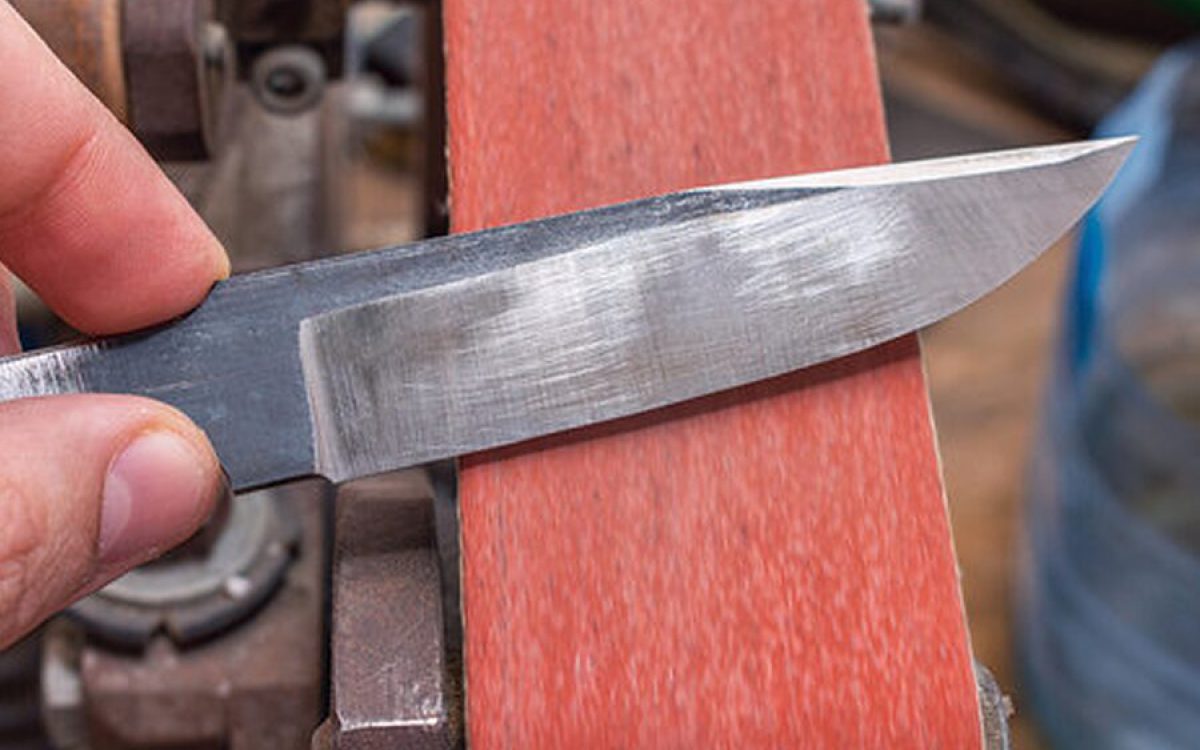
"Sharp" is used as if it were a feeling. In manufacturing and purchasing it has to be a measurement, or a specification is unenforceable and an inspection result is arguable. This article defines sharpness in terms that can be measured, and explains why two knives that both feel sharp can differ substantially.
The three components
| Component | What it is | How it is measured |
|---|---|---|
| Apex width | The width of the very tip of the edge, ideally near zero | Microscopy; not practical for production inspection |
| Included angle | The total angle of the edge between the two faces | Goniometer, laser measurement, or measurement against a known reference |
| Thickness behind the edge | Blade thickness at a defined distance from the apex | Caliper or micrometer at a stated offset |
These three determine cutting behaviour. A knife with a fine apex and a thick shoulder will cut poorly; a knife with a thin shoulder and a blunt apex will cut poorly for a different reason.
Measuring sharpness directly
Because the three components are hard to measure on a production line, sharpness is often assessed by cutting. Two approaches:
Cutting force or cutting resistance
An instrument draws the blade through a standard medium — often a fibre or polymer test card — and records the force required. Lower force means a keener edge. The test can be repeated after a defined number of cuts to measure how the edge degrades.
Standardised cutting tests
Institutional testing exists specifically for bladed articles, using a controlled medium and a defined number of cycles, with results expressed as cutting ability and edge retention. The most widely referenced programme comes from the cutlery research sector and is used by some manufacturers as a development tool and occasionally as a marketing claim. Its value is that it is repeatable and comparable between samples.
| Method | Measures | Practical for production? |
|---|---|---|
| Apex microscopy | Apex width, burr | No — development and failure analysis only |
| Goniometer | Included angle | Yes, as a periodic check |
| Caliper behind the edge | Thickness at a stated offset | Yes — the most practical check available |
| Cutting force instrument | Force to cut a standard medium | Yes, where the equipment exists |
| Standard cutting cycle test | Ability and retention over cycles | For qualification, not routine inspection |
| Slice paper / tomato test | Gross sharpness only | Yes, but not a number |
Why "it feels sharp" is unreliable
- A burr feels sharp. A wire edge left on the apex from grinding registers as sharp to a finger test and collapses within a few cuts. Burr removal is a process step, not an accident — see grit progression and burr removal.
- A polished edge feels sharper than it is. Fingers are poor instruments and respond to surface finish and friction as well as to the apex.
- A thick-shouldered blade feels dull. Even with a perfect apex, it wedges. The complaint is about geometry, not about the edge.
- The medium matters. A knife that excels on a soft tomato may be mediocre on a dense root vegetable, because the failure mechanism differs.
The relationship between sharpness and hardness
These are different properties and are frequently conflated:
| Property | What it means | Set by |
|---|---|---|
| Sharpness | The geometric condition of the edge right now | Grinding and finishing |
| Hardness | Resistance to deformation of the steel | Steel grade and heat treatment |
| Edge retention | How long sharpness lasts in use | Hardness, carbide structure, geometry, and the task |
| Toughness | Resistance to chipping and cracking | Grade, heat treatment, geometry |
A hard blade can arrive dull because it was ground badly; a soft blade can arrive razor-sharp and lose the edge in ten minutes. Buying on HRC alone is buying the wrong property — the point developed in reading an HRC report.
What to put in a specification
| Item | Reasonable statement |
|---|---|
| Included angle | A target with a tolerance, e.g. 30° ±2° included |
| Thickness behind the edge | e.g. 0.25 mm max at 1 mm behind the apex |
| Burr | A requirement that no burr is present, assessed by a defined method |
| Cutting test | An agreed medium and pass criterion where the equipment exists |
| Reference sample | A gold sample for comparison — see sampling |
Where a cutting-force instrument is not available at the factory, the practical combination is the included angle plus the thickness behind the edge plus a gold sample. Together they predict cutting behaviour reasonably well, and all three are measurable with inexpensive instruments. See inspection methods.
FAQ
What is a typical factory-angle for a kitchen knife?
Common ranges are around 15° per side for thinner Japanese-style edges and around 20° per side for European-style knives, giving included angles in the region of 30° to 40°. Harder steels tolerate lower angles; softer steels and rough use call for higher ones.
Should I specify a lower angle to make the knife sharper?
The angle and the steel have to match. A low angle on a soft or brittle steel produces a knife that dulls or chips quickly, which reads to the customer as a worse product despite a keener initial edge. See dulling mechanisms.
Why does my knife seem less sharp after a month?
Normal use dulls any edge. What matters is the rate, and the rate depends on hardness, geometry and what is being cut. If the decline is very fast, the cause is usually either insufficient hardness or a burr that was never fully removed.
Can sharpness be improved by the customer?
Yes, by sharpening, and the resulting quality depends on the angle they use. Supplying a care guide that recommends an angle consistent with the blade's design is a cheap way to protect the product's reputation — see sharpening and maintenance.
Looking for a kitchen knife manufacturer?
We manufacture chef knives, knife sets, Damascus and steak knives in Yangjiang with OEM and private label service. Get a quote today.
Get Free Quote → Browse Products