Kitchen Knife Quotation Traps: Weight, Piece Count and the Fine Print That Moves Your Cost
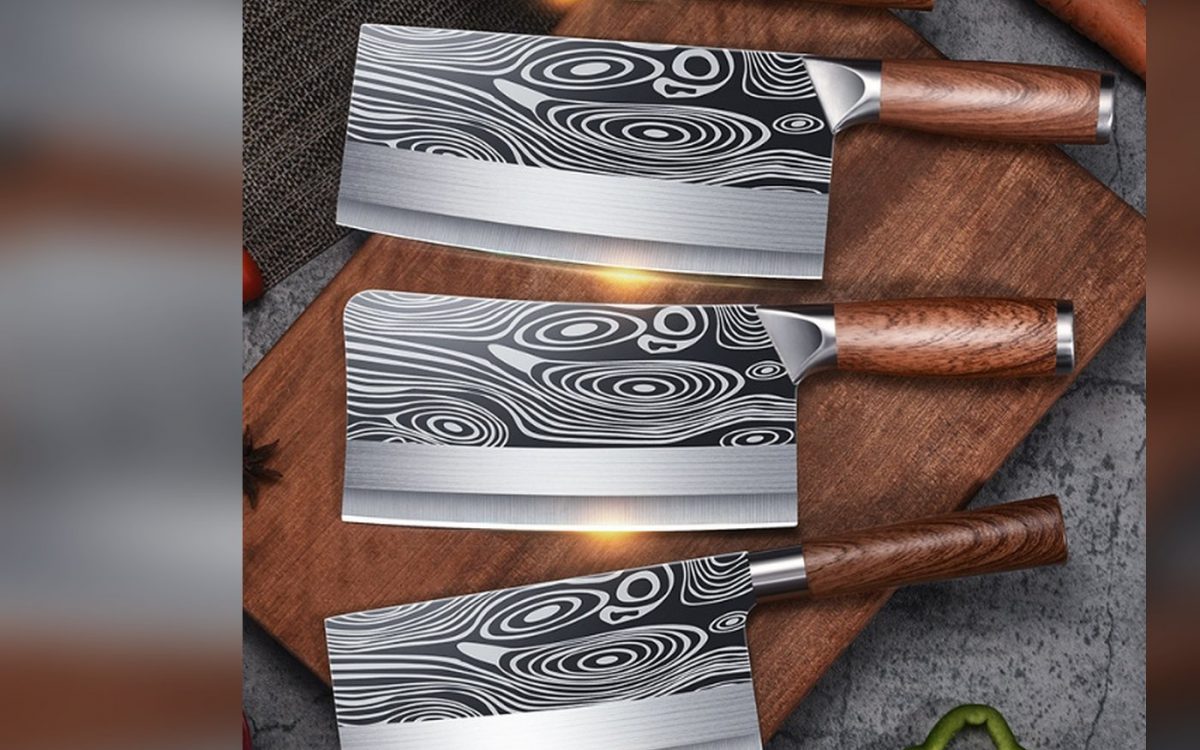
A kitchen knife quotation is a document that can be technically accurate and still misleading. The number is real; the assumptions behind it may not match how you intend to use the product. This article catalogues the assumptions that most often move the final cost, and how to expose each one before you commit.
Trap 1: the weight and thickness assumption
Steel is the single largest material cost in a knife. A quotation that does not state blade thickness is quoting a knife that could legitimately be made at a range of thicknesses. A 10 percent reduction in thickness reduces blade mass by roughly the same proportion, and the saving accrues to the person who did not specify it.
How to expose it: require spine thickness and, better, finished piece weight with a tolerance, in the quotation and in the specification. Weight is the cheapest single control against this — see inspection methods.
Trap 2: the grade that is not a grade
| What the quote says | What it might mean |
|---|---|
| "Stainless steel" | Any of a dozen grades, some unsuitable for a cutting edge held at hardness |
| "German steel" | Possibly a German grade, possibly a Chinese grade in the 1.4116 family, possibly a marketing phrase |
| "High carbon" | Could be 0.5 percent carbon or 1.0 percent — a large difference in behaviour |
| "Surgical steel" | Not a defined specification |
| "Damascus" | Could be forge-welded, pattern-welded, powder metallurgy or laser-etched — see Damascus types |
How to expose it: require a grade designation, and ask whether a mill certificate for the coil can be provided. A supplier who can produce a certificate is quoting a material; one who cannot is quoting a word. See steel grades explained.
Trap 3: the quantity basis
A price quoted at 10,000 pieces is a different price from the same article at 2,000. Where a quotation does not state the quantity basis, or states a range that the price does not actually hold across, the first order can arrive at a higher unit price than expected.
How to expose it: ask for a price break table — the unit price at each quantity band — and ask which bands are firm. This also reveals how much of the price is fixed setup cost versus variable cost, which is useful for judging whether a smaller trial order is feasible. See small trial orders.
Trap 4: packaging excluded, or assumed
Packaging is frequently the second-largest cost element after steel, and it is frequently outside the quoted unit price. A price that assumes a plain poly bag for a retail programme is not the price you will pay.
| Packaging element | Common exclusion |
|---|---|
| Retail carton | Frequently quoted separately |
| Printing and plates | One-off charge, sometimes not disclosed until artwork arrives |
| Insert or tray | Often omitted entirely |
| Export carton | Usually included, but check the count and grade |
| Packing labour | Can be a separate line for complex packs |
How to expose it: send your packaging specification with the enquiry, and require the price to include it. A price given against an unstated pack is not a comparable price — see reading a quotation.
Trap 5: testing and compliance as a later surprise
Compliance testing is a real cost with a real lead time, and it is often assumed to be included or assumed to be unnecessary. Neither assumption survives contact with the destination market.
How to expose it: state the destination market and ask explicitly which tests the price includes, which are extra, and what they cost. Put the answer in the purchase order. Our LFGB testing and FDA compliance articles give the shape of what to expect in the two most common markets.
Trap 6: the "Free" tooling
Tooling described as free is generally amortised into the unit price, which is a legitimate structure but should be recognised as one. The question that matters is not whether it is free but who owns it.
- If the buyer pays for tooling, the buyer normally owns it and can move it — see design and IP ownership.
- If tooling is amortised into unit price over an assumed volume, the agreement should say what happens if that volume is never reached.
- If tooling is free and silent, the buyer typically does not own it and cannot take it elsewhere, which becomes the switching cost described in changing factories.
How to expose it: state whether tooling is charged, amortised or included, the amount, and the ownership. This is also a customs valuation item in some markets — see tariffs and valuation.
Trap 7: lead time without a trigger
"30 days" is meaningless without a starting event and a scope. Thirty days from deposit, from sample approval and from packaging artwork approval are three very different commitments, and none of them includes the vessel booking window.
How to expose it: require the lead time to be stated as "X days from [named event], for [quantity], excluding vessel booking". Then build the schedule from the events you control — see lead time management.
Trap 8: cost elements that are "handled by the forwarder"
Where a quotation or a follow-up conversation says that some cost will be handled by the forwarder, that cost is usually the buyer's, and it will be billed by the forwarder instead of appearing in the goods price. Ask for the total, then test which components are in it.
A short set of questions that surfaces most traps
- Exact grade and hardness band, and can you provide a mill certificate?
- Spine thickness and finished piece weight, with tolerance?
- Price at each quantity band — which are firm?
- Is packaging included, and against which specification?
- Which tests are included, which are extra, at what cost?
- Tooling: amount, structure, ownership?
- Lead time: from which event, for which quantity, excluding what?
- Price validity in days?
The answers make the quotation comparable. Our due diligence article covers what to check about the supplier behind the numbers.
FAQ
Is a surprisingly low price always a trap?
Not always. A factory with spare capacity, a favourable steel buying point or a simpler process can genuinely be cheaper. But the difference should be explainable, and if the supplier cannot explain it, one of the assumptions above is probably the reason.
Should I share my target price?
Sharing a target invites a specification to be built to meet it, which can mean a thinner blade or a cheaper grade without that being stated. Share a specification and ask for the price instead.
How many suppliers should I quote?
Three is usually enough to establish the market level, and more starts to cost your own time. Compare on the same specification, quantity and packaging.
What if two suppliers quote identical prices?
That is common where both are buying from the same mill and using similar processes. It is not evidence of collusion; it is evidence that the market level is where you think it is.
Looking for a kitchen knife manufacturer?
We manufacture chef knives, knife sets, Damascus and steak knives in Yangjiang with OEM and private label service. Get a quote today.
Get Free Quote → Browse Products